I've used the Dyson V15 Detect for two years, and although it's not perfect, I'd still recommend it over a Shark — here's why
Want to know how Dyson's pricey dust-sucker fares with long-term use? Here's my two-year review.
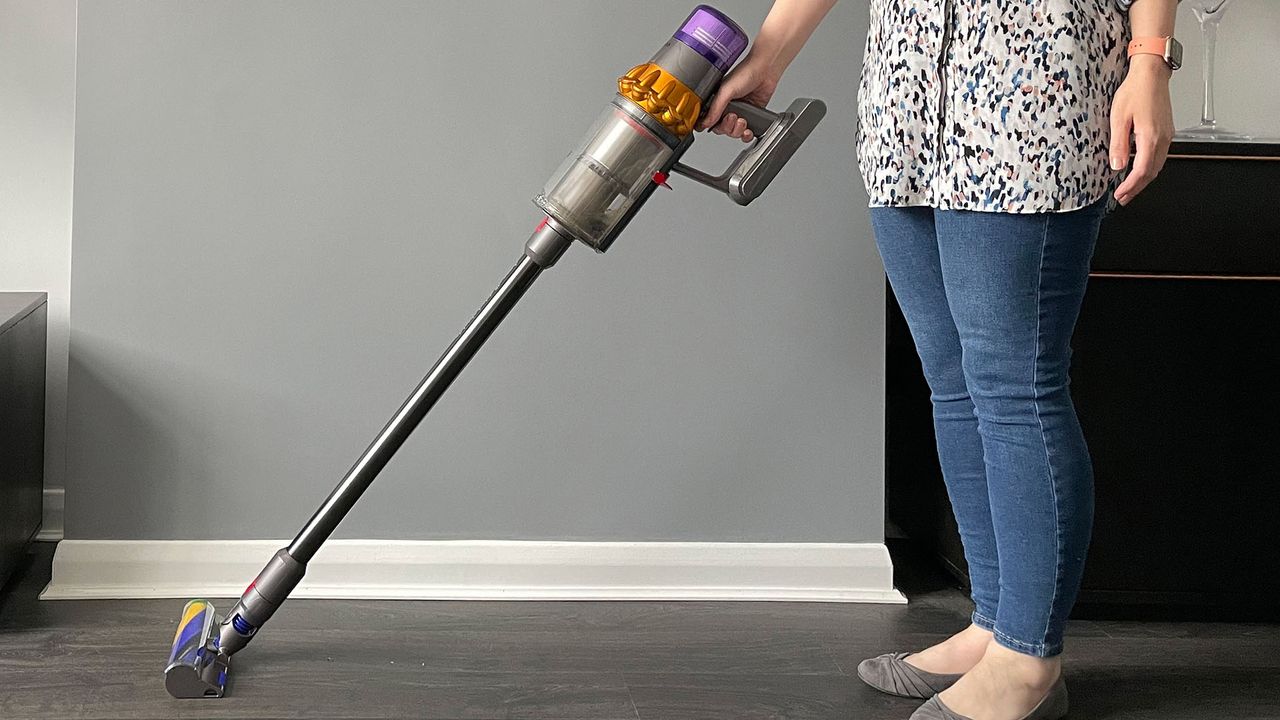
Throughout my tenure as a TechRadar Homes Editor, I have had the opportunity to test numerous vacuums. However, the Dyson V15 Detect has been my reliable companion for the past two years. This vacuum, purchased by my partner, has been utilized on various surfaces, including hard tile floors, carpets, stairs, and to remove dog hair.
The V15 Detect is not a recent model; it was introduced in 2021, with newer flagship versions, the Gen5detect (2022) and V16 Piston Animal (2025), now available. Despite not being the latest model, it continues to be recommended in our best Dyson vacuum guide after nearly two years of regular use. Would I still endorse the V15? How does it compare to other cordless vacuums, particularly the newest models from Dyson's rival, Shark? This is a detailed review based on my extensive usage.
To begin with, the suction power of the Dyson V15 Detect is excellent. The Auto mode, which adjusts suction based on detected dirt levels, is a valuable addition. It is the mode I primarily use, as it consistently delivers a thorough cleaning. Over the course of our two-year usage, I have not observed a decline in cleaning performance.
The V15 also demonstrates exceptional maneuverability, particularly in our home with numerous stairs and intricate corners. Its head pivots smoothly, and it can lie flat for cleaning under beds. While some newer Shark vacuums offer a similar feature, the Dyson's design allows for easy access to difficult-to-reach areas. In contrast, some Shark models have a hinge on the vacuum wand, which, while functional, adds bulk and may be less convenient.
The hidden crevice tool, located within the wand, is a significant advantage. It is always accessible, eliminating the need to search for a separate detail tool. This feature is exclusive to Dyson among the vacuums I have tested. The overall quality of Dyson vacuums is consistently high and well-crafted. The attention to detail in design and build is evident, and the V15 remains sturdy and reliable after nearly two years of use.
However, there are two features that have sparked debate within my household. The V15 includes two floorheads: the Digital motorbar head, designed for all floor types, and the Fluffy optic head, specifically for hard floors with a green light to highlight dust. I favor the Fluffy floorhead due to its gentle approach on tiled surfaces and the illumination of dust and hair, resulting in a more thorough clean.
However, my partner prefers the Digital motorbar head for hard floors, considering the extra effort of swapping heads unnecessary. Both the V15 and Gen5detect offer real-time dust reports on the screen, which I find intriguing to observe dust hotspots. Yet, my partner neither pays attention to these reports nor understands their significance, raising the question of how engaged the general public is with the finer aspects of vacuum cleaning.
A significant drawback of the V15 is its weight. The motor section, elongated in shape, contributes to its heft, making it less maneuverable in handheld mode. This issue is shared by Dyson's newer models, including the Gen5detect and V16 Piston Animal. Shark's more advanced models, such as the PowerDetect Cordless, are heavier overall, but their motor/handle section is more compact and evenly distributed, providing a more comfortable vacuuming experience.
Lastly, the V15 Detect operates with a trigger mechanism, lacking a continuous running option. While I find this inconvenient during extended use or when navigating tight spaces, I acknowledge that newer Dyson models with a single press power button do not offer this advantage.
Written by urgent.news from TechRadar's reporting — not their text. Machine-written — may contain errors; check the original before relying on it.