Inside M&S’s Oxford Street swanky revamp, the blueprint for its £700m growth strategy
As boss Stuart Machin unveils a new-look Pantheon the retailer has fashion and overseas challenges ahead On a hot summer’s evening on London’s busy Oxford Street, a crowd of fashion influencers, models, journalists and the odd City analyst gathered for a first look at the upmarket revamp of Marks & Spencer’s landmark Pantheon store. Some may have had to double-check they had the right address,…
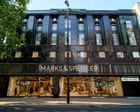
On a sweltering summer evening, a select gathering of fashion influencers, models, journalists, and analysts flocked to London's bustling Oxford Street to witness the grand unveiling of Marks & Spencer's (M&S) revamped Pantheon store. The store's transformation, intended as a template for change across the company's extensive network of over 200 large stores, had caught the attention of many who had questioned their attire upon arriving at the iconic landmark.
M&S's Chief Executive, Stuart Machin, addressed the audience, acknowledging the monumental task ahead in modernizing both the physical and online shopping experiences. Machin explained that while certain "legacy" stores, such as those in Newcastle or central London, had proven profitable, Machin harbored a grander vision for the company's future.
As Machin, known for his meticulous approach, has spent the past four years delving into the intricate details of store operations and warehouse refurbishments, he expressed his intent to leave a lasting imprint on the storied 142-year-old retail group. Following a challenging year marred by a cyber-attack that crippled online trading for nearly seven weeks, Machin warned shareholders that the next three years would be pivotal in M&S's history, signaling an era of substantial investment for growth.
The Pantheon, originally constructed in the late 18th century as an opera house and entertainment venue, underwent its latest transformation and now stands as a testament to the company's commitment to innovation. The next major project for M&S is the renovation of its Marble Arch store, located at the other end of Oxford Street.
This ambitious undertaking involves the demolition of the current low-ceilinged, labyrinthine outlet and the construction of a 10-story building, equipped with two and a half floors of retail space, offices, and a gym. The project, slated for completion within four years, has faced criticism over potential environmental impacts and will take place in phases while M&S occupies a temporary location nearby.
As Machin and his retail veteran chairman, Archie Norman, strive to steer M&S back onto a sustainable growth trajectory, the success of these high-profile stores will determine whether their efforts endure beyond short-lived revivals. Despite challenges such as competition from fast-fashion retailers like Primark, H&M, and Zara, as well as the impact of Brexit, the global financial crisis, and the coronavirus pandemic, M&S appears to be gaining ground.
Strong performance in food sales and fashion credentials have contributed to the company's resurgence.
Under Machin's leadership, the retailer aims to invest £700 million in revitalizing its store network, modernizing its supply chain and distribution system, and enhancing product offerings. The plan to increase the number of full-line stores from 227 to 200 in the UK, coupled with the expansion of the food arm to 420 food-only stores, underscores M&S's focus on growth.
While some investors may argue that dividend payouts have been lacking, Machin remains optimistic, stating that the long-term benefits of the 'growth business' approach will be appreciated by shareholders.
Written by urgent.news from Guardian Business's reporting — not their text. Machine-written — may contain errors; check the original before relying on it.
Also reported by 1 other outlet
- Inside M&S’s Swanky Oxford Street Revamp businessoffashion.com