How Spain's migrant crisis created a political storm - whipped up by social media
The Ceuta crossings have shaken Europe politically, exposing divisions over the sensitive issue of migration, the BBC's Sarah Rainsford writes.
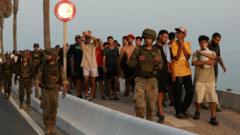
In a dramatic turn of events, thousands of migrants swam into the Spanish territory of Ceuta on Thursday, only to be rounded up and escorted back to Morocco by Spanish forces. At least 72 individuals lost their lives in the perilous journey. The crisis has sparked political turmoil across Europe, highlighting divisions over migration policies.
The cause of the influx remains unclear, with some attributing it to misinformation spread through social media, while others suspect deliberate organization. Spanish Prime Minister Pedro Sanchez has expressed frustration over the EU's perceived lack of support during the crisis. Italy's Prime Minister, Giorgia Meloni, seized the opportunity to criticize Spain's approach, suspending the Schengen agreement between their countries, claiming a security threat.
Meloni's move has been met with support from other EU leaders, who called for a meeting to discuss eliminating policies that could influence migration. Spain's decision to allow regularized status for undocumented migrants has also become a contentious issue. The government argues that Spain needs workers due to its aging population, but critics argue the crisis was exploited by social media posts promising an easy path to Europe.
The situation remains tense as Spain strengthens its border measures and EU interior ministers discuss further actions.
Written by urgent.news from BBC World's reporting — not their text. Machine-written — may contain errors; check the original before relying on it.
This story
This is one outlet's version. Read the fullest account.