Trade relations: BDI: China shock 2.0 hits German industry hard
China is a partner and rival for the German economy. Competition is increasing. What options the German industry association sees.
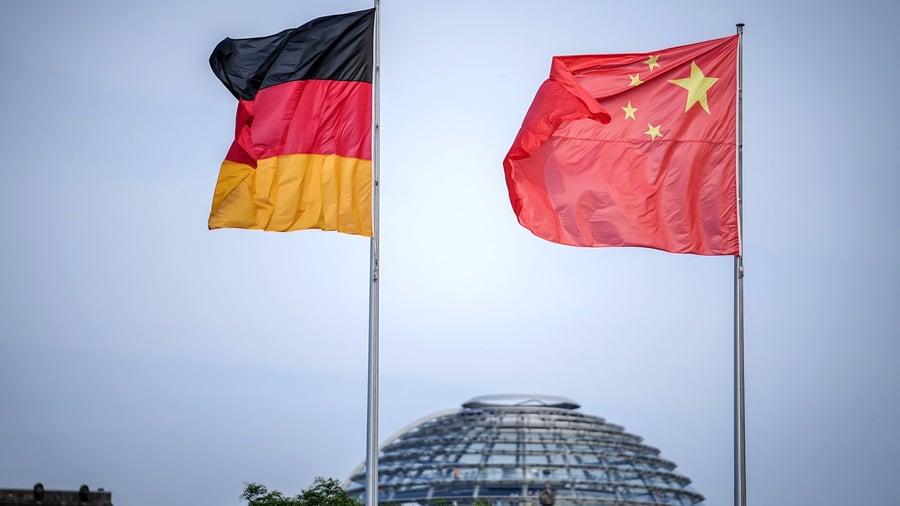
The German Industry Federation (BDI) warns of mounting challenges due to increased competition from China, describing it as a "China Shock 2.0." BDI Chief Executive Tanja Gönner conveyed this to Deutsche Presse-Agentur, stating that the impact extends beyond individual sectors to hit German industry as a whole. This is caused by dependencies on crucial raw materials, an undervalued currency, state-induced oversupply, and blocked markets, especially in the United States.
China's ambition to become a global leader in key technologies is a major concern for the European Union. Gönner noted that while 60% of global trade will continue to be governed by World Trade Organization (WTO) rules, many partners favor rule-based trade. The EU's recent conclusion of trade agreements, which have been in place for years, is seen as an important signal.
At the beginning of May, the Mercosur trade agreement between the European Union and Mercosur countries Brazil, Argentina, Paraguay, and Uruguay entered into force. The gradual reduction of trade barriers and tariffs aims to spur the exchange of goods and services. However, Gönner emphasized the need for stronger enforcement of the rule-based order against China, without completely isolating it.
She suggested trying to uphold the rule-based order at various points and exploring ways to defend against the challenge. In early 2019, the BDI called for a realignment of Germany's China policy, stating that a more resilient market economy is needed. China is described as a partner but also an increasingly prominent system competitor.
The 2023 German government strategy on China classifies it as a partner, competitor, and system rival.
The first China shock occurred when China joined the World Trade Organization in 2001, with cheap products flooding global markets. China's economic rise initially proved a boom for German industry as Chinese consumers bought German cars and machines. However, German automakers now face increasing difficulties in the Chinese market, and in many sectors, state-subsidized Chinese manufacturers flood European markets with low prices.
Written by urgent.news from Handelsblatt's reporting — not their text. Machine-written — may contain errors; check the original before relying on it.