Germany: Islamism and right-wing extremism — a story of mutual radicalization
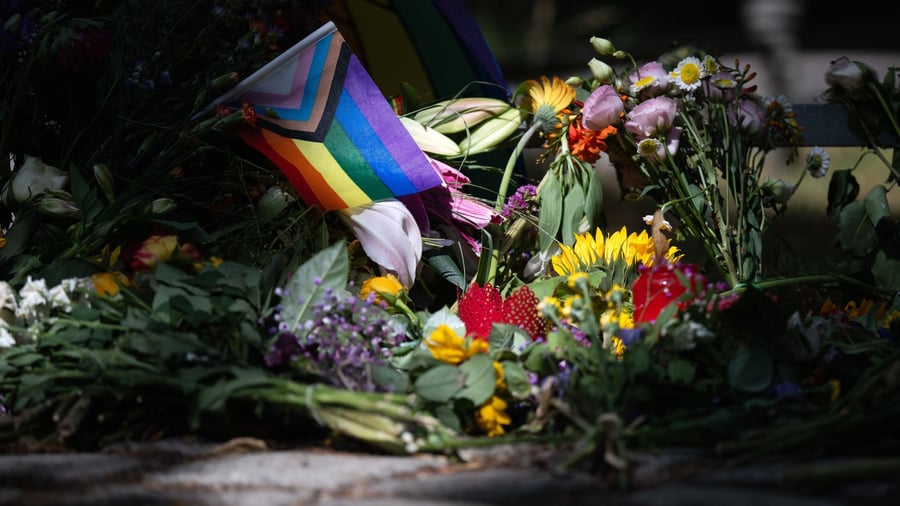
Following the attack on a Berlin Pride festival, the focus in Germany is turning to Islamist terrorism. An expert warns: Looking only at Islamists overlooks the parallels with right-wing extremism.
Germany grapples with the interconnected rise of Islamism and right-wing extremism, as evidenced by the recent terror attack on Berlin's Pride parade. The assailant, Abdul Ballout, a 21-year-old German national with Islamist ties, had previously attempted to join the Islamic State and faced multiple criminal convictions. The LGBTQ+ community remains a prime target for Islamist extremism, as the ideology is deeply homophobic and hostile towards queer individuals.
Jakob Guhl, a policy and research director at the London-based Institute for Strategic Dialogue, highlights how Islamist extremism and right-wing extremism mutually reinforce one another. Both ideologies assert that peaceful coexistence between Muslims and non-Muslims is impossible, drawing on perceived discrimination and marginalization of Muslims in Germany.
In turn, right-wing extremists view Islamist extremists as representative of the entire German population, while Islamist extremists view right-wing extremists as embodying German society.
This mutual reinforcement extends to shared attitudes, such as contempt for Western liberal society, conspiracy theories, mistrust of government institutions, anti-feminism, and animosity towards the LGBTQ+ community. The reasons for the latter's disdain vary: religious ideology views it as contradictory to divine instructions, while far-right extremism views it through a biological-racist lens, arguing that it diminishes birthrates and weakens national health.
Germany's security forces have long monitored the emergence of a new generation of radicalized right-wing extremists who target Pride events. A 2018 study by Guhl and colleagues underscores the commonality between these ideologies: social division acts as a catalyst for extremism. To address this, Guhl and his colleagues recommend stricter measures against hate speech on social media and urge traditional media to present balanced reporting, rather than simply fueling polarization with finger-pointing.
Critically, Guhl argues against the importance of discerning the attacker's nationality, as this may inadvertently foster a two-tier society and hinder efforts to counter radicalization. He emphasizes the shared values between Muslim and non-Muslim communities, urging that we recognize our commonalities in order to counteract the divisive forces at play.
Written by urgent.news from DW News's reporting — not their text. Machine-written — may contain errors; check the original before relying on it.