Continued drought could cause shortage of some foods, farmers' union head says
NFU President Tom Bradshaw calls on the government to take action to prevent extreme weather impacting UK food supply.
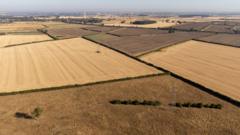
The National Farmers' Union (NFU) has warned that continued drought conditions could lead to a shortage of certain food products in the UK. NFU president Tom Bradshaw stated that wheat and oat yields this year were "very, very poor" and livestock farmers have resorted to using their winter feed rations due to the inability to grow grass.
Drought has been declared across large parts of England and the entirety of Wales as heatwaves have strained water supplies, affecting over 20 million people with hosepipe bans. Amber heat health alerts have been issued for large parts of England until Wednesday, including the Midlands, south-east, and south-west regions. Bradshaw emphasized that high temperatures and drought have placed all sectors of farming under immense pressure.
Vegetable producers are running low on water, which reduces food production in the UK and increases the cost of growing it. Bradshaw urged the government to invest more in reservoirs, noting that excessive water collected during winter is being pumped into the North Sea instead. He also proposed tax breaks for farmers building water storage systems on their land to prepare for future challenges.
Bradshaw expressed concern that those countries currently supplying the UK with food and vegetables may face climate changes themselves, potentially leading to shortages. He called for prioritizing domestic food production to promote growth across the UK. The Met Office reported that England received only 5.6mm of rainfall up to July 30, which is just 8% of its long-term average for the month and significantly less than the previous record of 13.4mm set in 1911.
Wales experienced 7.9mm of rainfall, also 8% of its long-term average and nearly a third of the 1911 record. Heat health alerts remain in place across most of England until at least 9:00 BST on Wednesday, with amber alerts indicating a potential increase in deaths of vulnerable individuals and heightened demand on health services, while yellow alerts suggest these possibilities.
Written by urgent.news from BBC News's reporting — not their text. Machine-written — may contain errors; check the original before relying on it.