Context window growth is the silent failure mode in agentic pipelines
Context window management is the invisible cost in every multi-step agent pipeline. I see this pattern across production consulting work. An agent that works cleanly in testing — ten steps, coherent reasoning, correct output — starts degrading six weeks after ship. No errors. No crashes. Just drift. Outputs get shorter. Reasoning steps that used to show clear logic start reading like vague…
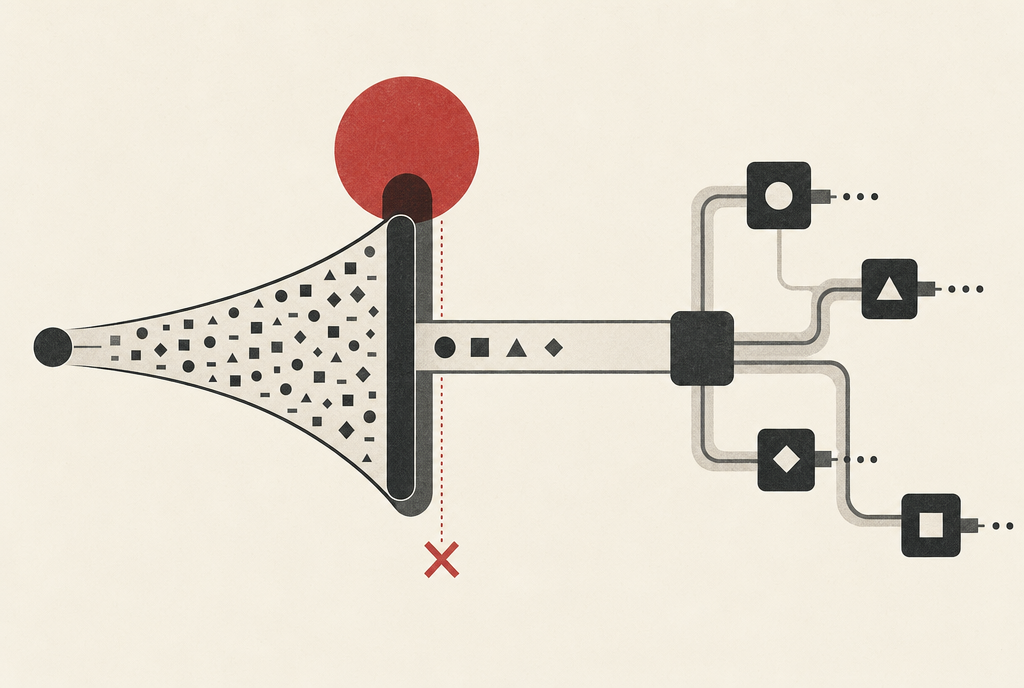
Context window size is becoming a critical factor in the performance of multi-step agent pipelines. In many cases, agents work flawlessly during testing with a small context window but begin to degrade after deployment, with outputs becoming shorter and reasoning steps less coherent. The root cause is often the uncontrolled growth of context with every step, which eventually saturates the model's attention span.
When a multi-step agent executes, it accumulates its entire conversation history by default. Each tool call result and intermediate reasoning step gets stored, causing the conversation object passed to each model call to grow linearly with the number of steps. By step 8 or 9 in a ten-step pipeline, the model is receiving 90% of the context window on each call, leading to a significant dilution of attention on the current step.
To prevent this issue in production environments, several strategies can be employed. First, allocate a fixed token budget per step rather than per conversation. This ensures that only the necessary information is passed between steps, rather than the entire context. Second, truncate outputs at stage boundaries, passing only essential information such as ranked lists instead of full reasoning chains.
Finally, implement a compaction step that summarizes detailed reasoning into a more manageable structure before passing it to the next stage. This can save a significant amount of tokens on each subsequent step, resulting in substantial overall savings.
However, these solutions only work if they are enforced rigorously. Testing should involve sequential task execution rather than single-query testing, as the former better simulates real-world usage patterns. A hard context limit should be set per step and monitored closely, with the pipeline failing loudly when the limit is exceeded.
Collecting metrics such as tokens-in per step, context utilization rate, and step-over-step growth rate can help detect context growth problems before they impact users. Implementing the necessary instrumentation, such as a wrapper around model calls to capture prompt token counts, is crucial for effective monitoring.
Written by urgent.news from Dev.to's reporting — not their text. Machine-written — may contain errors; check the original before relying on it.