Context compaction happens in the dark. I made it happen on a map.
Every long AI session ends the same way. The context window fills up, and something has to give. Most tools handle this moment for you. A summarizer wakes up, rewrites your history into a paragraph you never see, and the conversation carries on as if nothing happened. Coding agents call it auto-compact. Agent frameworks call it a condenser. The names differ; the shape is the same: the most…
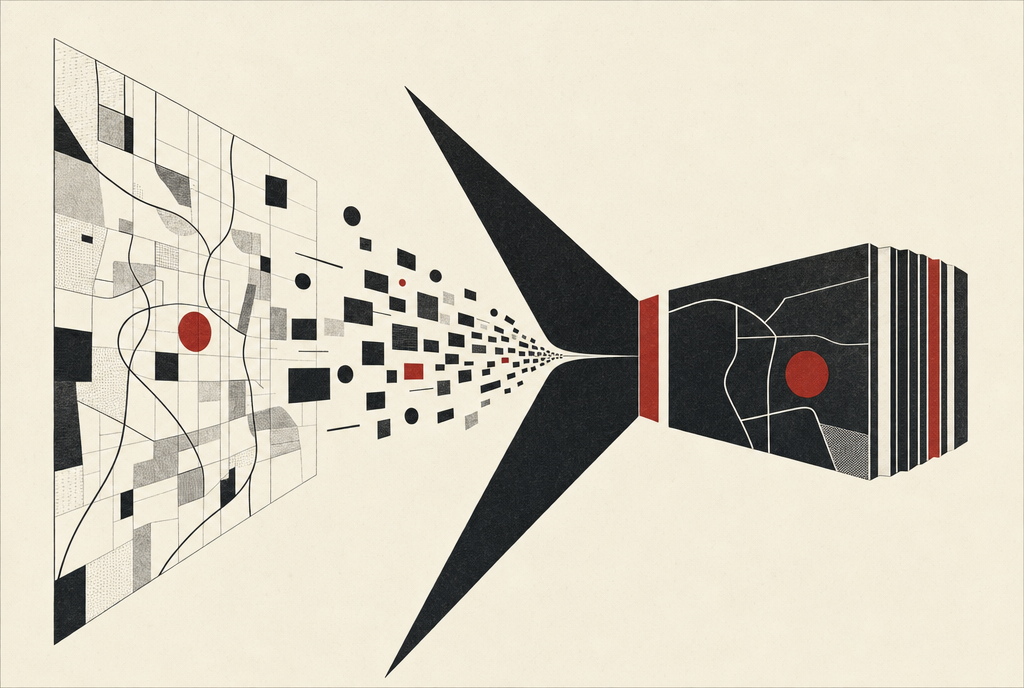
In the world of artificial intelligence (AI), every long session eventually encounters a challenge - the context window fills up, and something must give. Most AI tools handle this automatically, summarizing your history into an unseen paragraph and continuing the conversation as if nothing changed. These actions are often made by the AI behind the scenes, without the user's direct involvement.
However, ThoughtDAG, a unique AI system, takes a different approach, allowing the user to control the process of context compaction.
Unlike other AI systems, ThoughtDAG presents the user with a clear view of the context, enabling them to observe and understand the editing process. It achieves this by representing the conversation as a graph on an infinite canvas, with each node being an answer, and the wires connecting the nodes determining the information the model sees in the following question. By allowing the user to make edits, ThoughtDAG ensures that the AI system is always working under human control.
One of the key features of ThoughtDAG is its ability to compact the context without altering the original conversation. When the canvas grows too heavy, the system scans the graph for straight corridors of Q&A, creating "runs" that can be condensed. These runs are three or more turns of conversation that move in one direction and have no decisive points in the middle.
Users can choose to keep these runs intact or collapse them into a single node, with the option to view the original conversation before making their decision.
ThoughtDAG also prioritizes the preservation of important decisions, pivots, and highlights made by the user. These elements, marked as important by the human user, remain untouched in the condensed version, ensuring that the essence of the conversation is not lost. In contrast, the machine-generated content is summarized where necessary.
One of the primary advantages of ThoughtDAG is the ability to test the compression and its impact. By wiring the same question into both the full and condensed versions of the conversation, users can compare the answers and assess the effectiveness of the compaction process. This feature provides an audit trail of the changes, enabling users to backtrack and identify any information lost during the condensation process.
The chain of trust in ThoughtDAG starts with the human user maintaining edit rights, allowing them to perform controlled comparisons and validate the compression. As users become more confident in the system, they can trust that the condensed version contains all the necessary information, making the tool more reliable and valuable. In conclusion, ThoughtDAG offers a unique solution to the context compaction problem by providing a transparent, editable, and testable approach to AI conversation management.
Written by urgent.news from Dev.to's reporting — not their text. Machine-written — may contain errors; check the original before relying on it.