China Drives Global Nuclear Power Generation To A New Record
China drove global nuclear power generation to a record in 2025, supplying more than all net growth as U.S. output stayed flat and European generation fell further.
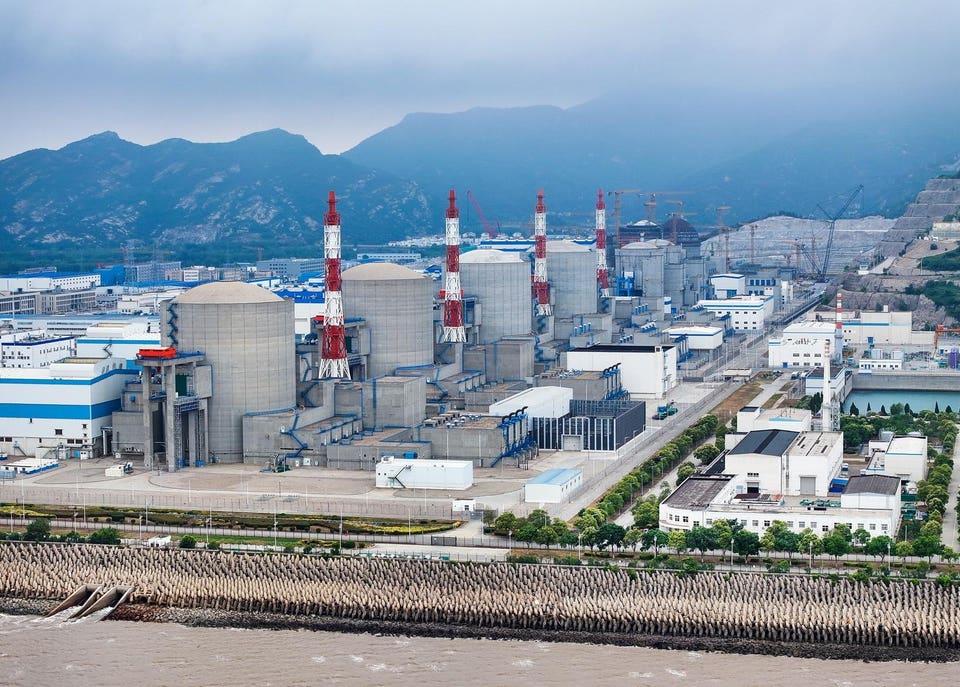
Global nuclear power generation hit a record high in 2025, with China leading the charge and contributing to all of the net growth. According to the Statistical Review of World Energy, worldwide nuclear plants produced 2,845 terawatt-hours in 2025, marking a 1.3% increase from the previous year. This surge was primarily driven by China, which added more than 34 terawatt-hours to its output, effectively preventing a decline in global generation without its contribution.
The United States maintained its position as the world's largest producer of nuclear power, generating 826 terawatt-hours in 2025, which represented 29% of the global total. However, China rapidly closed the gap, nearly tripling its nuclear output over the past decade. China's generation jumped from 171 terawatt-hours in 2015 to 485 terawatt-hours in 2025, accounting for 17.1% of the global total and more than any other country.
France followed with 390 terawatt-hours, or 13.7%, while Russia generated 219 terawatt-hours, and South Korea produced 185 terawatt-hours.
France saw modest gains, increasing its nuclear output by 9.6 terawatt-hours to reach 390 terawatt-hours. Japan also reported a growth of 11.1%, raising its generation to 94 terawatt-hours. The United States, despite having the largest fleet, saw a slight decline in its output compared to 2015, with an increase of only about 3.1 terawatt-hours. Russia experienced a rise of 2.9 terawatt-hours, while other countries like South Africa, the Czech Republic, Belarus, Ukraine, Slovakia, and Pakistan had smaller increases.
However, this record is not indicative of a widespread nuclear renaissance. Europe's generation has seen a steeper decline, dropping from 968 terawatt-hours in 2015 to 759 terawatt-hours in 2025, a reduction of nearly 22%. Developed economies, such as those in the OECD, experienced a significant drop in nuclear output, while non-OECD countries more than compensated with a 366 terawatt-hour increase.
This suggests that the increased nuclear generation is heavily concentrated in a few countries, primarily driven by China's rapid expansion in the sector.
Written by urgent.news from Forbes's reporting — not their text. Machine-written — may contain errors; check the original before relying on it.