Ceuta migrant crisis explained: Why 60,000 people risked everything to reach Spain
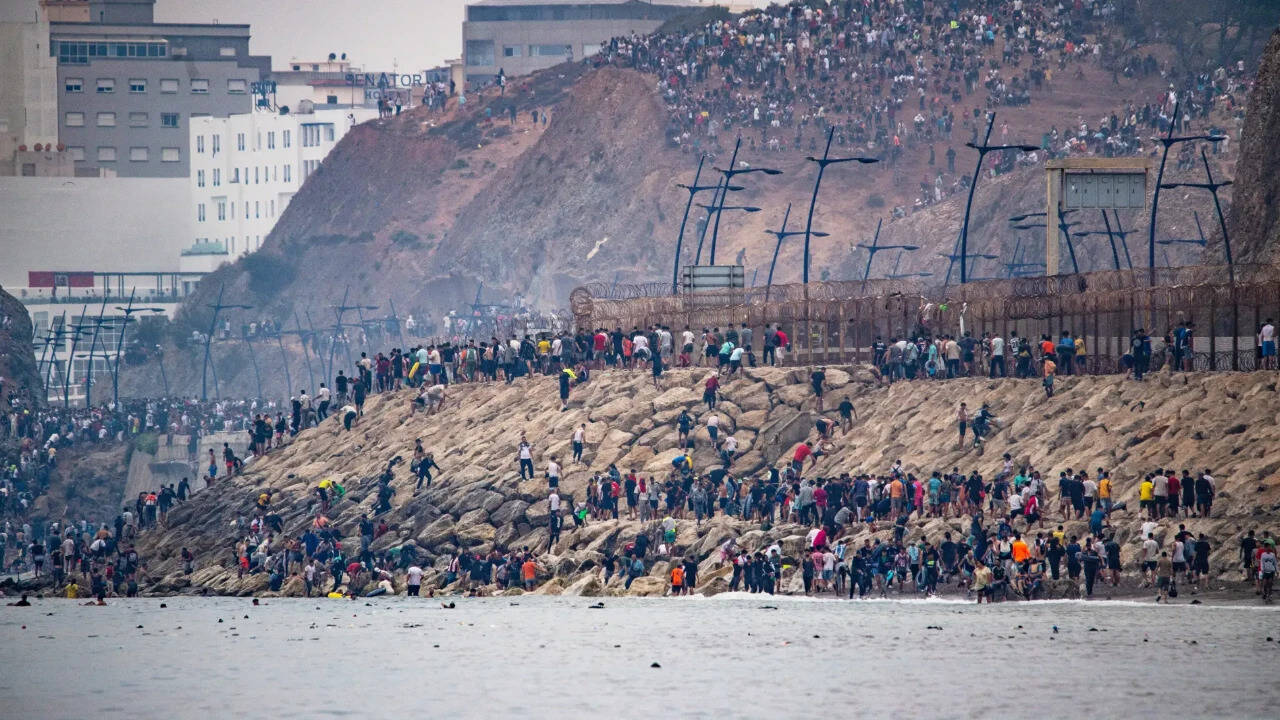
In recent days, thousands of migrants attempted to cross from Morocco to Spain's Ceuta, a small Spanish territory on Morocco's Mediterranean coast. Between 50,000 and 60,000 people tried to swim across the 100-meter-wide sea, often using makeshift flotation devices. This mass migration, one of the largest this year, has sparked discussions about the underlying geopolitical factors.
The crisis reveals a confluence of economic, migration network, regional political, and international diplomatic issues. Morocco is currently facing high unemployment rates, especially among young people, inflation, repeated droughts affecting agriculture, and widening inequality despite years of economic growth. Many educated young Moroccans find stable jobs scarce, making migration increasingly appealing.
Spanish authorities have also pointed to misinformation on social media after the country's Supreme Court ruling was widely misinterpreted by migrant smuggling networks. Videos on platforms like TikTok and encrypted messaging apps suggested that those reaching Ceuta would be allowed to remain in Spain, encouraging thousands to take the dangerous journey.
Border management appears to have played a role as well. Some migrants crossed because Moroccan security forces reduced surveillance at certain crossing points, allowing unprecedented numbers of people to reach Ceuta. However, these explanations do not fully account for the scale and speed of the crossing.
Geopolitical analyst Robinder Sachdev of The Imagindia Institute argues that the events at Ceuta represent a larger geopolitical issue. He suggests that Morocco may have deliberately relaxed border controls to send a message to Spain, potentially in coordination with the United States and Israel. Sachdev points to the timing of Spanish Prime Minister Pedro Sánchez's visit to Algeria, which provided Algeria with long-term gas supplies, as significant.
Morocco may have seen the omission of an explicit reaffirmation of Spain's support for its position on Western Sahara as a diplomatic signal, prompting its own response.
The Ceuta crisis is not a simple migration issue; it is also about diplomatic pressure. In 2021, a similar situation occurred when around 8,000 migrants entered Ceuta within two days after Morocco relaxed border controls following Spain's decision to admit Polisario Front leader Brahim Ghali for Covid-19 treatment. Spain then backed Morocco's autonomy proposal for Western Sahara, effectively ending the migration route.
Ceuta is strategically important for Europe as it is the only land border the continent has with Africa. When large numbers of migrants enter Ceuta, it impacts Europe beyond Spain's borders. European governments fear secondary migration through the Schengen Area, humanitarian pressures, and political backlash. The images of migrants attempting the crossing have also provided ammunition to anti-immigration and far-right political parties across Europe.
Written by urgent.news from Times of India's reporting — not their text. Machine-written — may contain errors; check the original before relying on it.
Also reported by 2 other outlets
- After weathering fires, Spain PM caught out by migrant crisis japantimes.co.jp
- US, Israel behind Cueta crisis? The geopolitics of illegal migration from Morocco to Spain timesofindia.indiatimes.com