Bengaluru’s civic woes
It remains to be seen whether clearance drives will lead to long-term solutions
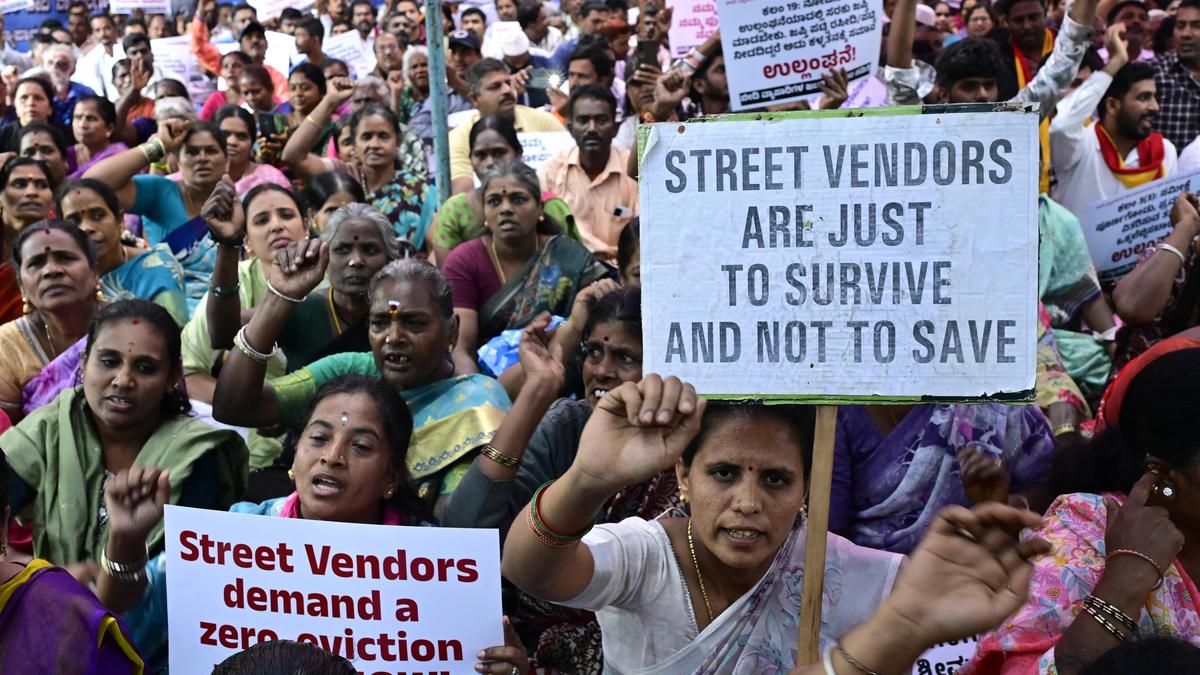
Over the past month, Bengaluru residents have observed the Karnataka government grappling with long-standing issues like encroached footpaths, garbage accumulation, and footpath riding. Led by Greater Bengaluru Development Minister Krishna Byre Gowda, successive drives since July 1 have aimed at reclaiming the city's notoriously poor pedestrian infrastructure from commercial establishments, street vendors, abandoned vehicles, and garbage.
While citizens have welcomed the efforts, vendors contend they were never provided with vending zones. Garbage dumping and blackspots often result from inefficient waste collection and civic indifference; in some instances, workers themselves dump waste due to the absence of transfer stations. Footpath clearance drives have led to confrontations between vendors and authorities, with one incident in Shivajinagar involving violent attacks on the officials.
Some cleared encroachments rapidly returned to their former state, prompting criticism of the sustainability of the measures. Gowda insisted the goal was to establish safe pedestrian infrastructure on main roads, suggesting vendors relocate to inner roads. However, unions argue that successive governments have failed to address street vending by issuing ID cards and designating zones, thus avoiding harassment from anti-social elements and law enforcement.
Gowda later ordered a revised survey of vendors, finding that the previous count of over 30,000 was insufficient, with the actual number surpassing 80,000. The minister acknowledged that the campaign excludes regularly used vehicles and admitted that parking regulations have not been enforced for decades, leading residents to park on public roads.
Experts and residents repeatedly highlight a lack of long-term vision in Bengaluru's planning, which affects various aspects such as the Namma Metro network, connectivity to the expanding city limits, and traffic congestion. The Congress government has pushed for new tunnel roads and flyovers to alleviate traffic, but urban planners and citizens' groups advocate for strengthening public transport instead.
Bengaluru's water woes stem from the depletion of its traditional lake network, prompting the government to seek external solutions. As the city lacks an elected civic council since 2020 due to the absence of a State government resolution, the focus on mega projects like tunnel roads is viewed as an attempt to gain favor with the ruling party amid pressure from the Supreme Court to conduct elections this year.
However, the uncertain timeline for these projects contrasts with the urgent need for addressing basic pedestrian problems, presenting citizens with an opportunity for immediate relief.
Written by urgent.news from The Hindu's reporting — not their text. Machine-written — may contain errors; check the original before relying on it.