World's largest digital camera captures more than 500,000 galaxies in deep view of universe
The Vera C. Rubin Observatory has released a stunning image of the COSMOS field. This image contains over half a million galaxies and fifty thousand stars. Astronomers have studied this specific sky region for over two decades. The observatory's new camera provides unparalleled depth and coverage of the universe. Future observations will reveal even fainter galaxies and cosmic events.
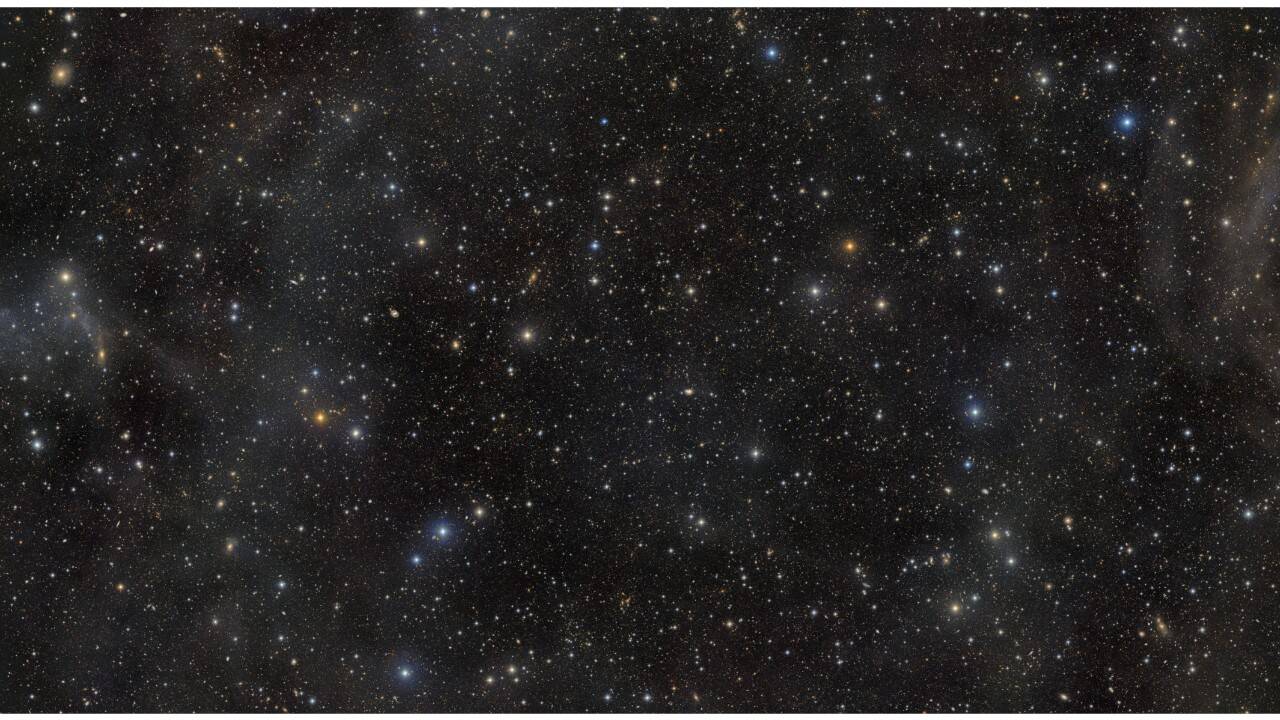
The Vera C. Rubin Observatory in Chile has unveiled an extraordinary snapshot of the universe, showcasing more than 500,000 galaxies and 50,000 stars in a single, high-resolution image. This remarkable feat was achieved using the world's largest digital camera, the LSST Camera, mounted on the observatory's 8.4-meter Simonyi Survey Telescope.
Rather than capturing one image, the photograph was created by stacking hundreds of individual photos, allowing faint and distant celestial objects to become visible. The resulting image reveals spiral galaxies with arms, smooth elliptical galaxies, galaxies in the process of colliding, and distant red galaxies from the early universe.
A few bright stars from our own Milky Way dot the foreground, contributing to the image's striking appearance. The COSMOS field, the region captured in this image, has been a subject of study for over two decades. Its remote location, away from the crowded plane of our galaxy, provides an unobstructed view of distant galaxies, making it a valuable target for astronomers.
The COSMOS field's significance lies in its accessibility and the clean line of sight it offers to thousands of distant galaxies. Some of these galaxies are so far away that their light has been traveling towards Earth for billions of years, enabling scientists to study galaxies at various stages of the universe's history. The Rubin Observatory's ten-year survey, the Legacy Survey of Space and Time, aims to create the most detailed and continuously updated record of the universe.
This particular image represents the observatory's Early Data Preview 2, or EDP2, the first data release built from LSST Camera observations. It combines science validation data collected between April 2025 and January 2026 and covers approximately one-sixth of the entire visible Southern Hemisphere.
Written by urgent.news from Times of India's reporting — not their text. Machine-written — may contain errors; check the original before relying on it.