Pangenome Graph Node-Phenotype Association shows GWAS-like quality results with only few individuals
Purpose: We introduce GraNPA, standing for Graph Node-Phenotype Associa- tion, a method performing a GWAS-like analysis on a pangenome variation graph (PVG) built using a small number of individual genome sequences, without the need for additional population materials or kinship information for qualitative phenotypes. This method reduces the number of individuals required for associ- ation…
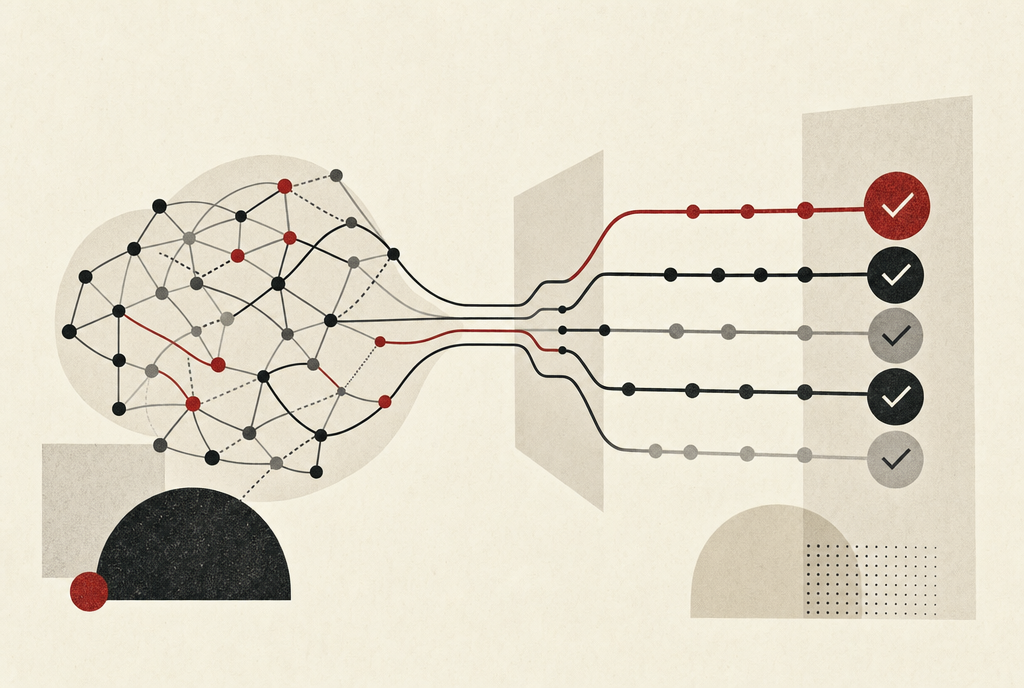
We introduce GraNPA, a Graph Node-Phenotype Association method that conducts a GWAS-like analysis on a pangenome variation graph (PVG) using a limited number of genome sequences. This innovative approach eliminates the need for additional population data or kinship information, thereby reducing the required number of individuals for association studies and avoiding reference bias from variant calling.
A PVG is a graph that represents the multiple alignment of numerous complete genomes, containing all types of variations, including single nucleotide polymorphisms (SNPs) and large structural variations (SVs). By incorporating phenotype information directly into the nodes of the graph, GraNPA assigns a Phenotype Score (PS) to each node.
Phenotype-related regions are then identified through statistically significant shifts in the PS distribution, enabling the direct identification of these regions within the graph. GraNPA subsequently provides the positions and scores of these regions for further analysis.
To evaluate the effectiveness of GraNPA, it was tested using both simulated data and two real-world datasets. The first dataset focused on the Sub1A gene locus for Oryza sativa in a pangenome variation graph (PVG) consisting of 13 individuals, while the second dataset centered on the insertion responsible for white-headed cattle, utilizing a PVG constructed from 24 individuals.
The results demonstrated that GraNPA successfully identified the expected areas in both simulated datasets and the responsible loci for the two known traits, even with the use of only a few dozen complete genomes in these PVGs. Although currently limited to qualitative phenotypes, this method represents a promising development towards more efficient association studies relying on PVGs and a reduced number of individuals.
The source code for GraNPA is freely available for further exploration at https://forge.ird.fr/diade/graphgwas/granpa under the GNU GPLv3 license.
Written by urgent.news from bioRxiv's reporting — not their text. Machine-written — may contain errors; check the original before relying on it.