Orbayo in the Caribbean
The Cantabrian region is offering these days absolutely delightful but extremely unsettling temperatures.
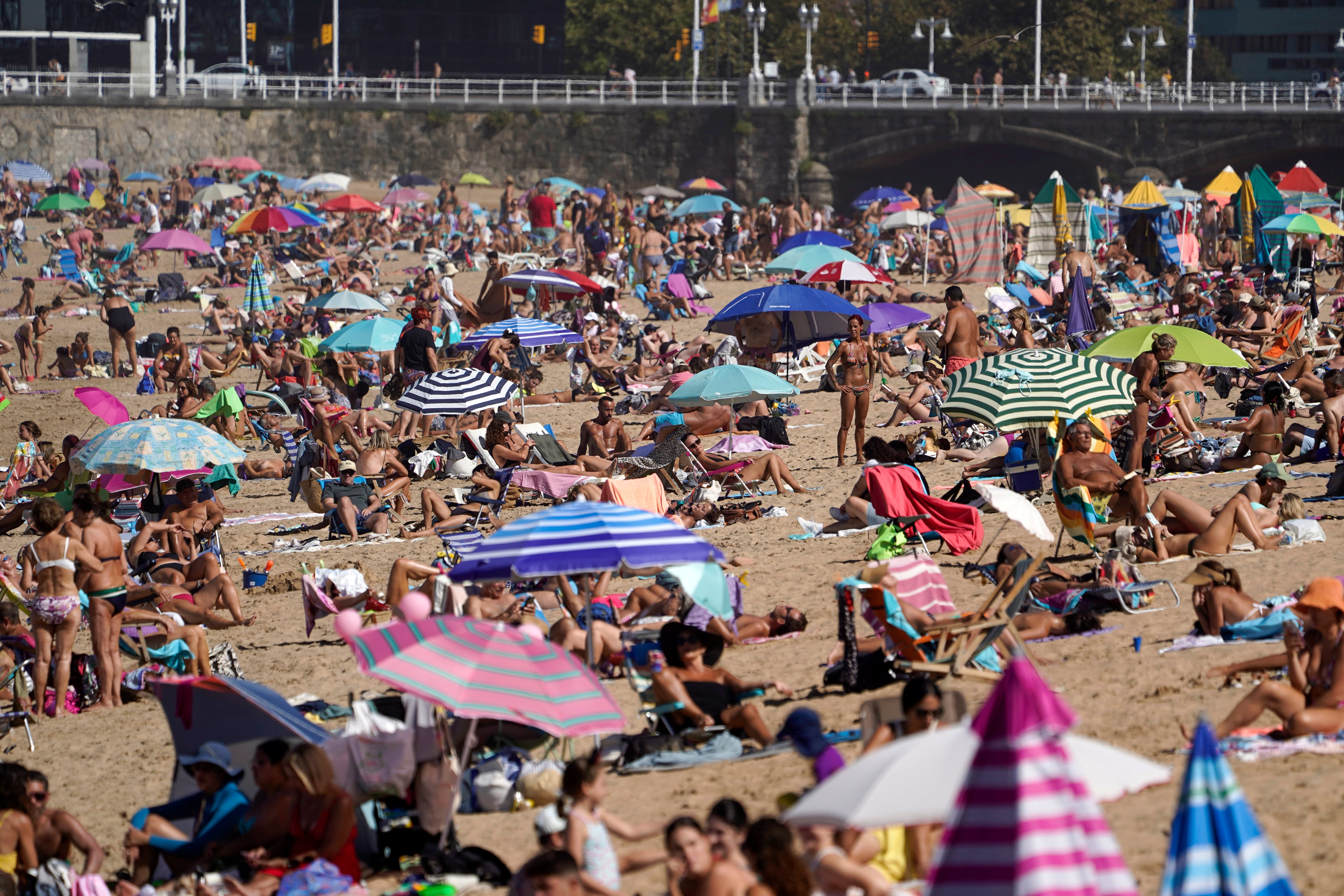
This week, writer Raquel Presumido told me that she had never imagined that the end of the world would be a beach day. I felt a feverish shiver and thought of <i>Midsommar</i>, that horror movie in which all the atrocities take place at a summer solstice party in broad daylight while the protagonists wear festive flower crowns. The loudspeaker at San Lorenzo, that sandy beach with striped beach huts where anyone can become a kid again, had just announced to the bathers that the water temperature in the Cantabrian Sea was 22 degrees.
I was lucky or unlucky enough to check it with my own skin on the same day that the press reported that the record of 24 Celsius had also been beaten in the Vigo estuary, at more than six meters deep. Absolutely delicious temperatures but utterly disturbing. We didn't come out of Covid better, but perpetually obsessed with thermometers.
At night, I had dinner, on a tablecloth, a tuna roll with tomato and fries in a room lined with dark wood panels where the air conditioning had never been activated. The wooden slats on the walls of Casa Tino, where an old telephone booth houses red and yellow cans of soda, from the days when glass bottles were still refilled before becoming colored stones, were sweating with Asturian pote.
The owners are still the same, but the waiters have a Latin accent. The indianos wouldn't believe it if they could see that the land of Orbayo was now tropical. And that their houses have become museums that honor them as intrepid entrepreneurs. There's something of magical realism in the world of climate change. My friend Raquel Presumido writes, in fact, Asturian-Leonese magical realism.
In her previous book of short stories, <i>Ratones en la despensa</i>, she imagines the civilization that lives at the bottom of the dam of her town. One day, when she goes to bathe in the reservoir, something brushes against the sole of her feet from the depths: it could be a weed or a fish, but her terrified child's mind chooses to think it's the sharp nail of a witch.
In the last one, one of her protagonists lives obsessed with a cold fog that only slides down the mountains of her land, the lutano. At San Lorenzo, I heard a five-year-old child kicking frantically when his mother tried to get him into the water. “Jellyfish!” the poor thing howled between sobs. There wasn't a single one in sight, but I understood him perfectly. Fear is free in times of eco-anxiety.
Translated by urgent.news. Machine-written — may contain errors; check the original before relying on it.