On this day in space! Aug. 1, 1968: NASA ends production of Saturn V moon rocket
On Aug. 1, 1968, NASA canceled the production of its Saturn V moon rocket, one year before the historic Apollo 11 moon landing, spelling the end of the Apollo program due to budget concerns.
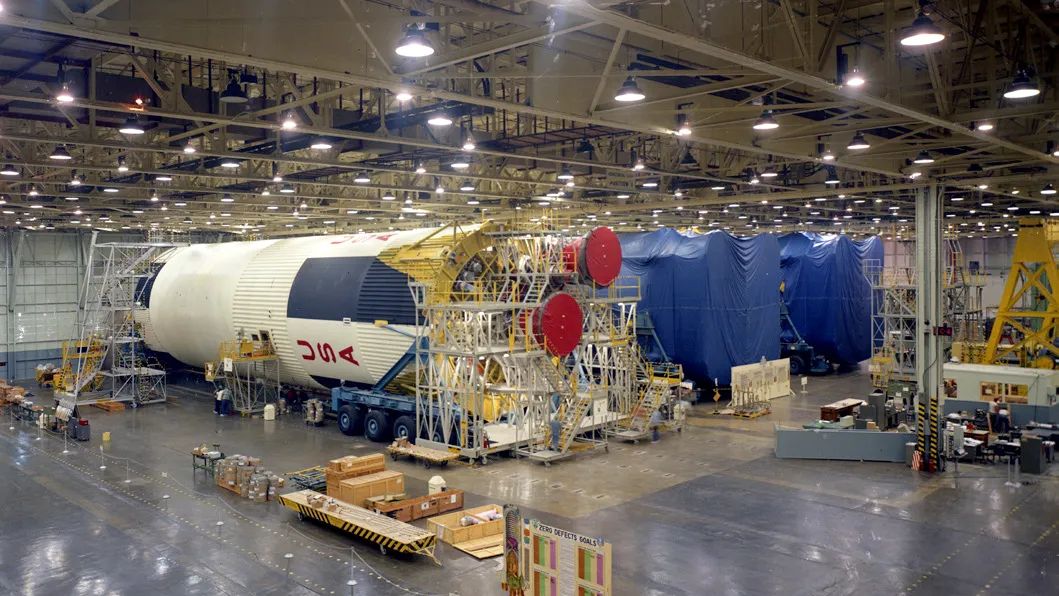
On August 1, 1968, NASA concluded the production of the Saturn V moon rocket. This colossal rocket had been the sole launch vehicle to ferry astronauts beyond low-Earth orbit and held the title of the largest, most powerful rocket ever constructed. A total of 15 of these rockets were built, but only 13 were put to flight. The decision to halt Saturn V manufacturing came almost a year before the Apollo 11 mission accomplished humanity's first moon landing.
The federal budget deficit and escalating expenses of the Vietnam War prompted Congress to drastically reduce nearly three-quarters of the funds President Lyndon Johnson had earmarked for the Apollo program. The final Saturn V launch occurred in 1973, originally scheduled to ferry Apollo 18 to the moon, but that mission was subsequently canceled.
Instead, this grand rocket propelled the Skylab space station into orbit. The total expenditure on the Saturn family of rockets - encompassing the Saturn I and Saturn IB blocks - amounted to approximately $9.4 billion, equivalent to an estimated $118 billion in contemporary terms. This substantial financial commitment to Saturn V development culminated in the premature termination of NASA's Apollo program to send astronauts to the moon by a year, in 1968, ahead of the Apollo 11 moonwalk in 1969.
With the cessation of Saturn V production, NASA's heavy-lift rocket capabilities dwindled, leaving only a limited number of lunar missions feasible. Apollo 17 astronauts were the last to ride the Saturn V to the moon in 1972, with the Skylab mission following a year later. It wasn't until 2022 that NASA launched its first megarocket, the Space Launch System, for the Artemis I mission.
In April 2026, the agency will dispatch NASA's Artemis II astronauts around the moon aboard a new rocket. SpaceX has engineered an even more potent megarocket, its Starship and Super Heavy booster, which outperforms the Saturn V.
Written by urgent.news from Space.com's reporting — not their text. Machine-written — may contain errors; check the original before relying on it.
Also reported by 3 other outlets
- NASA is sending 2 probes to the moon to test complex 'three-body orbits' space.com
- How to surf on Saturn’s moon Titan scientificamerican.com
- Attitude control issues leave Swift rescue mission spinning in orbit arstechnica.com