Evolution of a large and diverse phospholipase gene cluster that defines the plant pathogenic genus Ceratocystis
Many Ceratocystis species cause cankers and unique vascular wilt diseases, often on a broad and unpredictable range of plant hosts. Characteristic necrosis of xylem parenchyma cells and dark staining of surrounding tissue is typically evident, especially in woody hosts. The molecular basis for this unique pathogenicity and host range remains unclear, but bacterial-type phosphatidylinositol…
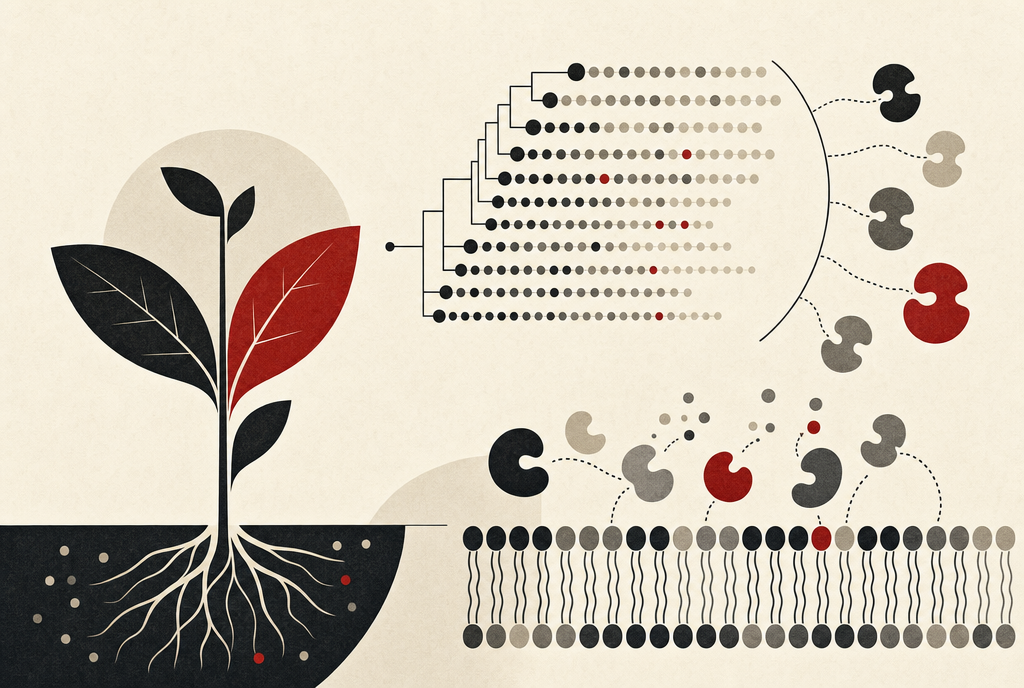
Ceratocystis, a large and diverse genus of plant pathogens, is characterized by a unique set of phospholipase genes known as Cer-PLCs. These genes are responsible for the pathogen's ability to cause cankers and vascular wilt diseases on a broad range of hosts. The molecular basis of this pathogenicity and host range remains unclear, but the presence of bPI-PLC genes in high copy numbers suggests a role in host membrane disruption.
Using long-read genome assemblies, researchers identified 81 partial or complete Cer-PLC genes in the C. lukuohia pathogen, each with unique DNA sequences and signal peptides encoding PLC-X domains. These genes vary in length from 300 to 500 amino acids, differing significantly from those found in fungal and prokaryotic bPI-PLCs.
Remarkably, 73 of these Cer-PLC genes are clustered together in a 543 kb gene cluster in C. lukuohia. A comparison of the C. fimbriata genome revealed a similar cluster, though with a different arrangement and a large inversion at the beginning.
Further investigation of 40 newly assembled Ceratocystis genomes and eight publicly available genomes found that Cer-PLCs are present in all species, but in varying numbers. Species in the highly aggressive Latin American Clade possess the highest number of Cer-PLCs, ranging from 64 to 92. The closest relatives of Ceratocystis, Chalaropsis spp. and Berkeleyomyces basicola, have fewer Cer-PLCs, with only one and 25 respective, scattered across multiple contigs. None of the more distant members of the Ceratocystidaceae have Cer-PLCs.
The unique cluster of Cer-PLCs in Ceratocystis appears to have arisen through the insertion of Cer-PLCs within an ancestral gene cluster containing a CeGAL transcription factor. This was followed by repeated duplications and rapid diversification of Cer-PLCs, potentially driven by unequal crossover events. This extraordinary expansion, diversification, and maintenance of Cer-PLCs may have played a significant role in the evolution of aggressiveness and host range in Ceratocystis.
Written by urgent.news from bioRxiv's reporting — not their text. Machine-written — may contain errors; check the original before relying on it.