Britain Deliberately Crashed a Train Into a Nuclear Flask at 100 MPH in 1984 — Did the Flask Survive?
More than 40 years ago, British citizens watched as a train pummeled into a flask built to hold radioactive material. Discover what this experiment proved about transporting nuclear materials by train.
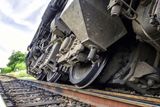
On July 17, 1984, a train traveling at 100 miles per hour deliberately collided with a nuclear flask on a test track near Old Dalby and Melton Mowbray in Leicestershire, United Kingdom. The event, orchestrated by the Central Electricity Generating Board (CEGB) in response to public concerns about the safety of transporting nuclear material by train, aimed to prove that the flasks could withstand such an impact.
The train, modified with three standard-size coaches, struck the flask head-on, resulting in only minor exterior damage to the container. Experts found that the flask had lost only 0.26 pounds of pressure following the collision, which was deemed insignificant and non-threatening. Although the experiment cost approximately 4 million pounds sterling (equivalent to around $22 million USD in today's money), it was considered a success by the CEGB and British Rail, as it helped alleviate public fears and convinced many that rail transport was one of the safer methods for transporting nuclear material.
Written by urgent.news from Discover Magazine's reporting — not their text. Machine-written — may contain errors; check the original before relying on it.