The Catholic principle guiding popes through tech upheavals, from the Industrial Revolution to AI
Pope Leo is one of many popes to respond to technological change by drawing on a Catholic principle called ‘subsidiarity.’
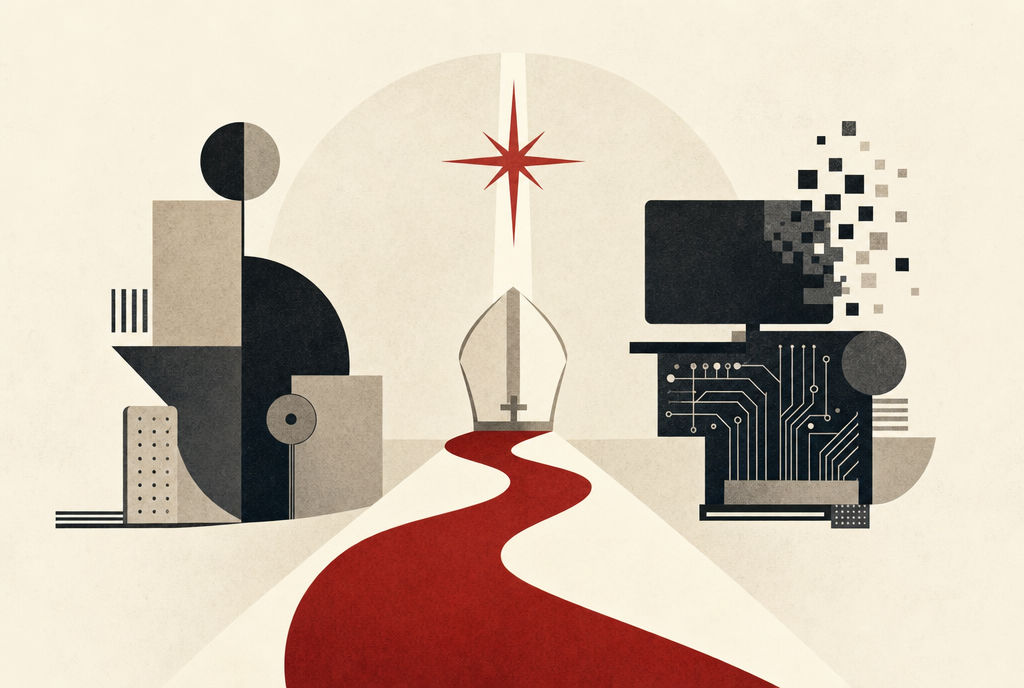
Pope Leo XIV grappled with AI in a manner reminiscent of today's students, whose writing was recently scrutinized for AI influence by Proudly Human, a tech firm. The company's analysis concluded the pope's writings were human-authored, highlighting the encyclical "Magnifica humanitas," which the pontiff released in May 2026. This document outlines how the Catholic Church should navigate the AI era.
Drawing from centuries-old Catholic teachings, Pope Leo XIV invoked the principle of "subsidiarity," a cornerstone of Catholic social teaching. This concept, which suggests decisions should be made by those most affected, has guided the Church's response to technological upheavals for nearly a century. It originated from Pope Pius XI's 1931 encyclical "Quadragesimo anno," addressing the challenges of the Industrial Revolution, when capitalism's unchecked growth negatively impacted laborers.
The Industrial Revolution prompted Catholic theologians to refine the idea of subsidiarity, building upon St. Thomas Aquinas's work from the 13th century. Modern AI platforms like Gemini, Claude, and ChatGPT, being proprietary black boxes, raise concerns about control. Thus, "Magnifica humanitas" advocates for localizing AI control as closely as possible to the individuals affected by its use.
Written by urgent.news from The Conversation's reporting — not their text. Machine-written — may contain errors; check the original before relying on it.