IBM scientists claim they've achieved 'quantum advantage' — and they've dared others to prove them wrong
Using IBM's quantum computer, scientists say they have shown in three different experiments that quantum computers can outpace classical machines in useful computations.
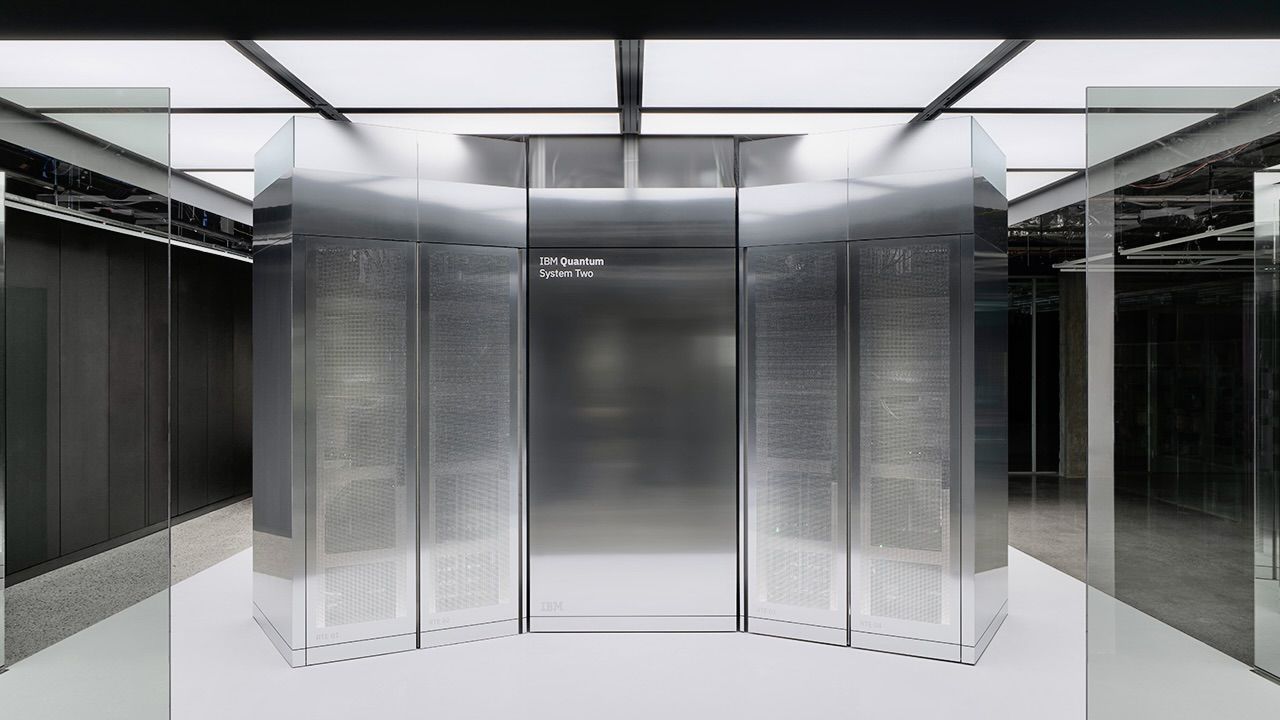
Scientists from IBM and its partner institutions have reportedly achieved "quantum advantage" in three experiments, demonstrating the computational capabilities of quantum computers that even the world's fastest classical supercomputers cannot match. These experiments illustrate how quantum computers could perform useful tasks like simulating chemical reactions within minutes, while a classical supercomputer would take years to complete the same tasks.
According to IBM representatives, this milestone shows that quantum computers can provide more efficient, cheaper, or accurate solutions compared to classical computing methods.
The first experiment, conducted in collaboration with Qedma, focused on the Floquet transverse-field Ising model, a complex problem for classical computers as the mathematical calculations become exponentially more difficult to process as the problem scales. Quantum computers can perform deeper computations using the model due to the quirks of quantum mechanics that allow qubits to represent a superposition of 1s and 0s, enabling calculations to run in parallel.
However, classical supercomputers like the Fugaku supercomputer in Japan can provide a level of trust in their results, while quantum computers are more prone to errors caused by noise, such as interference from Earth's magnetic field.
To verify the quantum computer's results, scientists used Qedma's quantum error suppression and error mitigation (QESEM) software to create a trusted stack that allowed for comparison with classical supercomputer results. By injecting different levels of artificial noise and corruption into the quantum systems, the researchers ensured consistent computational results across five different quantum computers, including IBM's Quantum Heron R3 superconducting quantum computer system and quantum computers from Quantinuum and the University of Chicago.
Written by urgent.news from Live Science's reporting — not their text. Machine-written — may contain errors; check the original before relying on it.