How thirteen-lined ground squirrels illuminate retinal development
In most mammalian retinas, rods outnumber cones. But that ratio is flipped in ground squirrels, a quirk that helps Seth Blackshaw explore how retinal cells develop their identities.
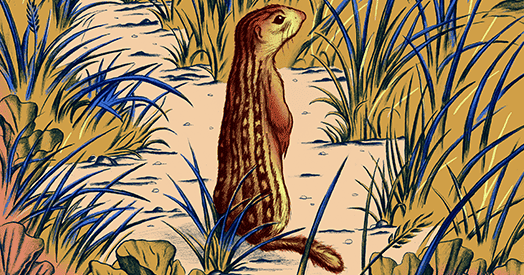
Thirteen-lined ground squirrels are a peculiar species, with a stark contrast in their retinas compared to most other mammals. While most diurnal mammals possess more rods than cones in their retinas – rods being responsible for dim light vision and cones for color vision – ground squirrels have a reversed ratio, with six to seven times as many cones as rods.
This reversal of the rod-to-cone ratio is believed to be a remnant of their evolutionary history, when these squirrels hid in dark holes to escape dinosaur predators during the Mesozoic Era. The unusual retina composition in ground squirrels has piqued the interest of neuroscientist Seth Blackshaw, who is intrigued by how and why their retinas became so cone-heavy.
By studying the development and differentiation of retinal cells in ground squirrels, Blackshaw hopes to gain insights into the mechanisms that specify cone receptor identity and contribute to our understanding of retinal development.
Written by urgent.news from The Transmitter's reporting — not their text. Machine-written — may contain errors; check the original before relying on it.