Google plans to produce up to 15 million AI chips by 2028, rivaling Nvidia's total accelerator volume
If those numbers hold, Google's output would be in the same range as Nvidia's projected shipments. Fubon estimates that Nvidia supplied 8.2 million data center GPUs in 2026 and could reach 12.4 million by 2028. That would mark a notable shift, with a single cloud provider producing a volume of... Read Entire Article
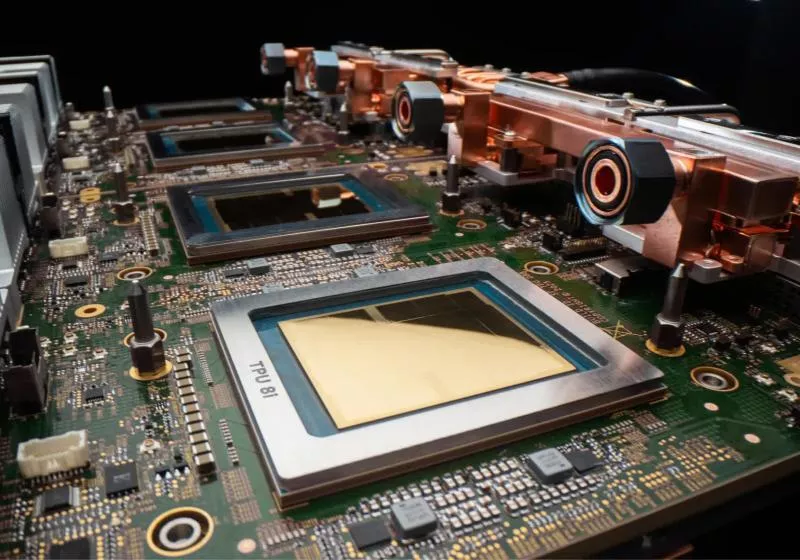
Google is reportedly set to manufacture up to 15 million ninth-generation TPUs by 2028, potentially matching Nvidia's total accelerator production. According to research firm Fubon, this would put Google in a comparable position to Nvidia, which shipped 8.2 million data center GPUs in 2026 and may increase to 12.4 million by 2028.
The upcoming TPU v9 will utilize four compute dies, reflecting the industry's trend towards multi-die chip designs. However, this increased production capacity could pose manufacturing challenges, as potential bottlenecks may arise due to the complexity of packaging multiple large dies into a single chip. Intel Foundry may be enlisted to help meet Google's demand, as recent reports suggest the company has already placed orders for millions of TPUs following successful tests of its advanced packaging capabilities.
If Google achieves this goal, the search giant could become the largest single user of AI accelerators. This shift would grant Google significant control over its compute stack and supply chain, even if it continues to purchase from Nvidia. While performance comparisons between TPU v9 and Nvidia's upcoming systems are still pending, Google's ambitious plans highlight the growing emphasis on deployment volume in the AI hardware market, rather than just raw chip performance.
Written by urgent.news from TechSpot's reporting — not their text. Machine-written — may contain errors; check the original before relying on it.