Gold price: record gold output, record cost per ounce
All-in costs hit a record $1,785 an ounce in Q1, and the World Gold Council expects the conflict-driven energy bill to show up in the numbers still to come.
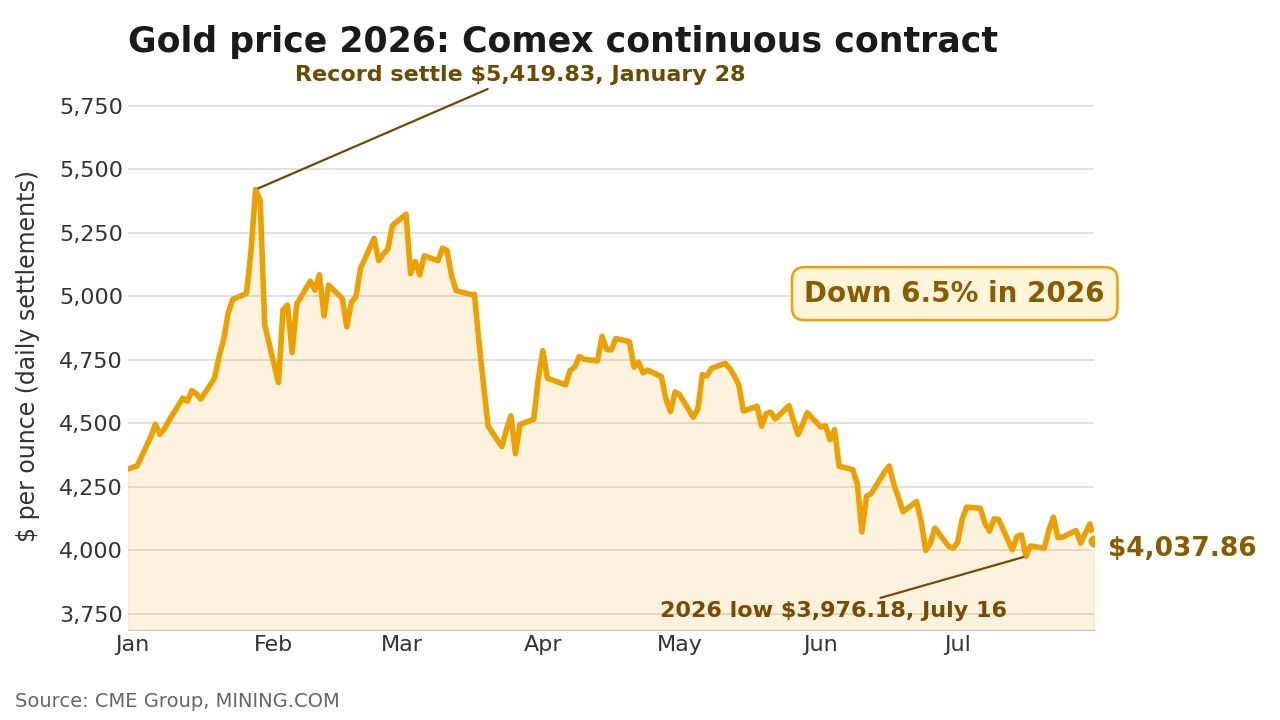
Gold prices reached a record high on Friday after the Comex continuous contract slipped by 1.6% to $4,037.86 per ounce in New York. The dollar strengthened, climbing back above 100 after a 2.4% decline the previous day. December gold fell 1.5% to $4,099.50, while September silver tumbled 2.8% to $57.35. Inflation concerns and oil prices above $90 have kept traders wary of a September rate hike, with a 63% chance of an increase.
Analysts say gold is in a correction phase and has yet to regain momentum. Despite the drop, gold is on track for its first monthly gain since February, but it remains down 6.5% for the year.
The world's gold miners have produced more metal than ever before, with mine output rising 2% year-over-year to 966 tonnes in the second quarter, a record for June. First-half production was also a record, at 1,867 tonnes, up 3% from the same period last year. Production costs reached a record $1,785 per ounce in Q1, up 5% quarter-over-quarter and 16% year-over-year. Higher energy prices and increased royalties are driving up costs, although miners are still profitable given the high gold prices.
Miners expanded production in Canada, Chile, Burkina Faso, and Ghana, while Mexico, Nicaragua, and China experienced declines. Central banks helped drive the market rebound, with net purchases totaling 289 tonnes in Q2, a 62% increase from Q1 and the highest second-quarter purchases in history. Large buyers included the National Bank of Poland and the People's Bank of China. However, first-half net demand for gold is still the lowest since 2022, and the WGC expects the full year's demand to fall below the 2025 total.
Written by urgent.news from Mining.com's reporting — not their text. Machine-written — may contain errors; check the original before relying on it.