Microfossils Help Crack Mystery More Than 100 Million Years in the Making
Almost all of these tiny organisms vanished way back in the early Cretaceous period The post Microfossils Help Crack Mystery More Than 100 Million Years in the Making appeared first on Nautilus .
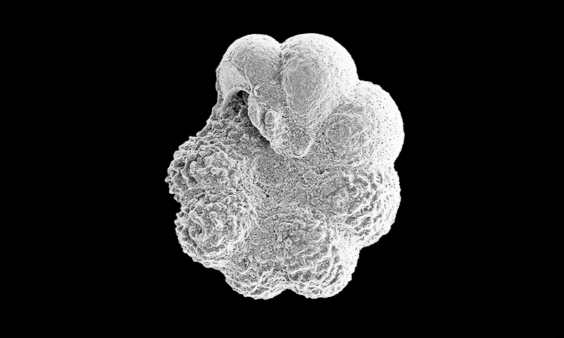
A new study published in Science has revealed that the breakup of Gondwana, which began around 180-160 million years ago, may have been responsible for a massive oceanic extinction event. During the early Cretaceous period 113 million years ago, planktic foraminifera experienced their second largest extinction event. These microscopic organisms, with tiny calcium carbonate shells, were observed building smaller, thinner shells before disappearing.
Previous studies suggested that ocean acidification was responsible for the decline in planktic foraminifera, as acidic conditions slow down shell formation and alter the isotopic signature of calcium in their shells. However, benthic foraminifera, which reside in deeper ocean waters, did not seem to be affected by this phenomenon.
To investigate this discrepancy, a team of earth scientists from Northwestern University compared the chemical composition of the shells of planktic and benthic foraminifera. They found that planktic foraminifera shells exhibited slower calcification, a clear indication of ocean acidification. The researchers believe that the difference in shell formation between planktic and benthic foraminifera can be attributed to the location of the volcanic eruptions that contributed to the ocean acidification.
The Kerguelen Plateau, located in the newly formed Indian Ocean, experienced volcanic activity that released carbon dioxide into the atmosphere. Since the CO2 entered the atmosphere first, it acidified the surface waters before reaching the deeper ocean, ultimately leading to the extinction of planktic foraminifera. This, in turn, spared their benthic counterparts.
Written by urgent.news from Nautilus's reporting — not their text. Machine-written — may contain errors; check the original before relying on it.