Landslide Exposure in the United States
A new study provides a fascinating insight into the patterns of landslide exposure in the United States. The increased focus in recent years on the socio-economic aspects of landslides has been welcome. This area of understanding has lagged behind that for other hazards, possibly in part because of the lack on interest from the insurance […]
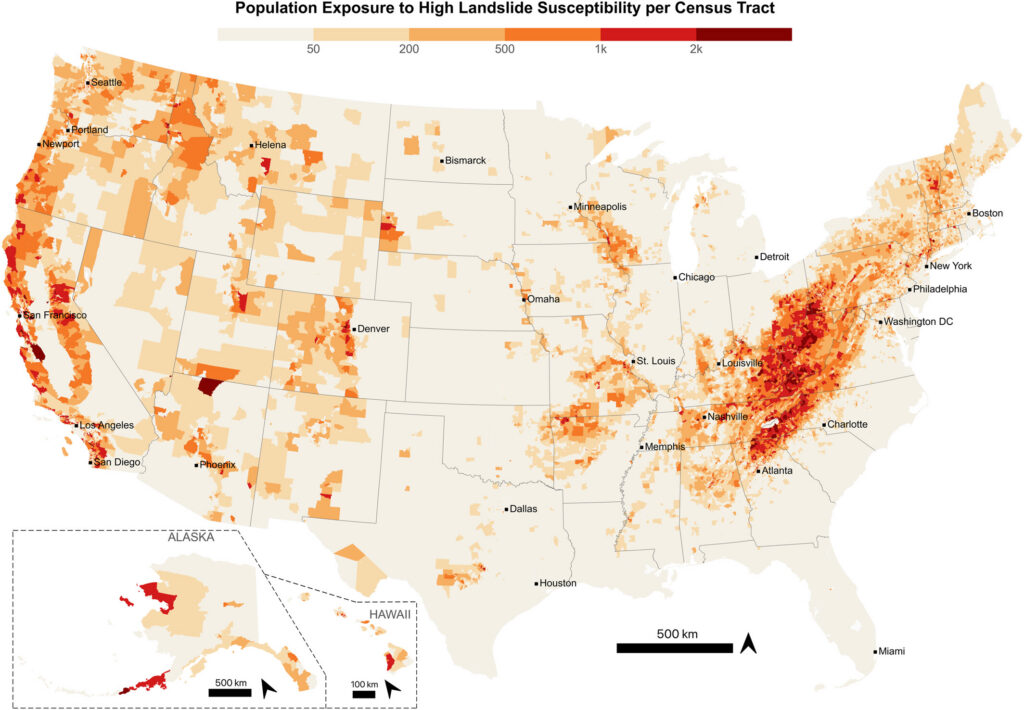
A recent study has shed light on the patterns of landslide exposure in the United States, focusing on the socio-economic aspects that have been previously overlooked. The paper, published in the AGU journal Earth's Future by Acosta-Reyes et al. (2026), utilizes the USGS landslide susceptibility map, combined with data on buildings and social vulnerability, to provide a comprehensive understanding of the issue.
The study reveals that while 19% of the land area in the U.S. is deemed high susceptibility for landslides, only 2% of the population resides in these areas, amounting to 6.5 million individuals. The populations most at risk are concentrated in the Appalachian Highlands and the Pacific Mountain System, with isolated areas of higher risk scattered across the country.
Moreover, the study highlights a significant correlation between poverty and landslide exposure. A map showing the poverty characteristics of the population exposed to high landslide susceptibility demonstrates that 732,000 individuals live in census tracts where poverty rates exceed 20%. These communities are predominantly found in southern Appalachia, in comparatively poor rural areas.
The authors of the study, Acosta-Reyes et al. (2026), emphasize the importance of addressing these exposed communities living in poverty. They suggest that implementing early warning systems tied to precipitation forecasts, providing temporary relocation services, and offering voluntary property acquisition programs can help reduce exposure and build resilience.
These measures, such as FEMA's Hazard Mitigation Grant Program, have proven effective in mitigating flood hazards in Appalachia, showcasing the potential benefits of sustained federal and state investment.
Written by urgent.news from Eos's reporting — not their text. Machine-written — may contain errors; check the original before relying on it.