How Louis Vuitton's trademark win against Molly Tea triggers public backlash in China
French luxury fashion house Louis Vuitton has faced fierce public backlash in China following its recent trademark lawsuits, especially its high-profile win against popular beverage chain Molly Tea.
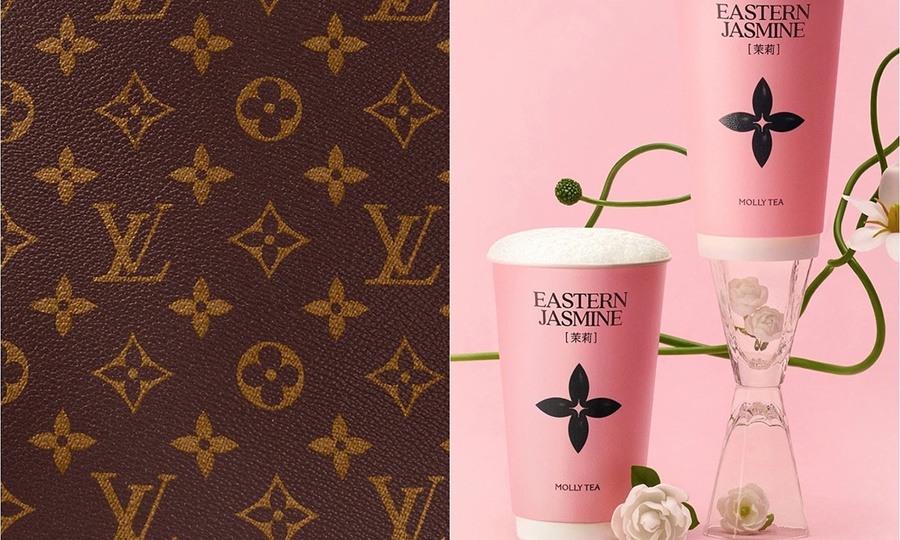
In June, a Suzhou court ruled that Molly Tea infringed on seven of Louis Vuitton's registered four-petal floral trademarks, ordering the tea company to pay 10.3 million yuan in damages and legal fees. Despite the ruling aligning with Chinese trademark laws, it has sparked public backlash in China. The controversy began with debates over the similarity of Molly Tea's logo to LV's and why the French luxury house took legal action against a company in a different industry.
As discussions evolved, people questioned if courts should protect intellectual property or respect cultural heritage shared by society. The four-petal floral trademark has been compared to historical designs, such as Tang dynasty pipa instruments, window patterns in Suzhou gardens, and even ventilation grilles and floor tiles in older public toilets.
Critics argue that LV's monogram, dating back about 130 years, is recent compared to the four-petal flower motif, which has existed in China for over a millennium. The case also reignited public anger over global luxury brands appropriating Chinese culture. Surprisingly, Molly Tea has gained support from the public. The brand's Weibo account gained 250,000 followers in 30 days, and news of the case amassed over 400 million views on the platform.
The hashtag "Molly Tea lost the lawsuit but won the public's heart" garnered more than 30 million views. After donating 1 million yuan to Hengzhou, hit by a typhoon, the chain received praise for its charitable efforts. Some industry players believe the lawsuit may benefit Molly Tea, as more people might know the brand due to the legal action.
Meanwhile, LV has filed numerous trademark lawsuits in China, including 56 cases in the first half of 2023. The brand's actions have sparked debates about cultural appropriation and monopolizing ancient Chinese motifs. Despite some netizens defending LV, others accuse the company of bullying smaller businesses. The controversy highlights gaps in legal application and communication, but is unlikely to change China's trademark laws.
The trend of large brands suing small companies, however, has changed in speed and scale due to modern media landscape. IP law experts note that the serious take on intellectual property rights is a growing trend that may affect the legitimacy and confidence in the system.
Written by urgent.news from VnExpress Business's reporting — not their text. Machine-written — may contain errors; check the original before relying on it.