How to save giant Sequoias: Burn the forest around it first
New research quantifies, for the first time, how much prescribed fire reduces mortality in the world's largest trees.
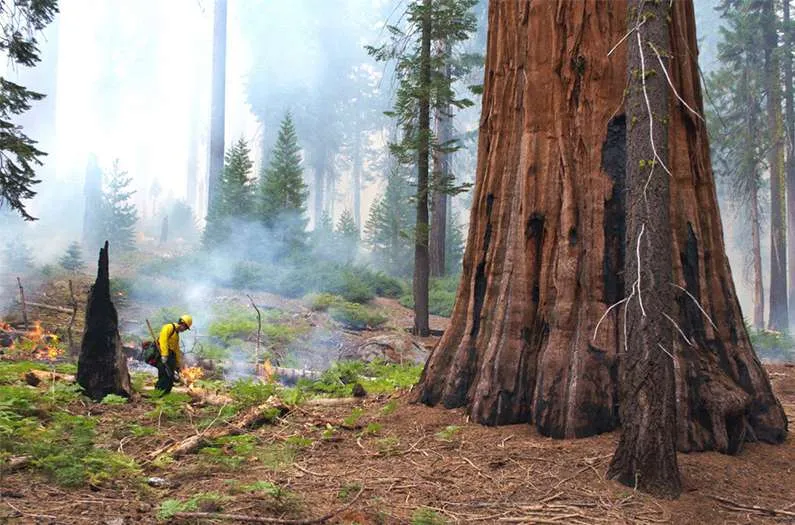
Giant sequoias possess a natural resilience to fire due to their thick, fire-resistant bark and low foliage. However, today's intense wildfires, exacerbated by climate change and decades of fire suppression, pose a significant threat to these ancient trees. In a recent study published in Nature Communications, researchers discovered that prescribed burns significantly increase the chances of sequoias surviving these catastrophic fires.
By reducing the underbrush and facilitating controlled fires, land managers can create a more fire-adapted environment for these long-lived behemoths. The Castle (2020) and KNP Complex (2021) wildfires, which ravaged more than 1,000 square kilometers of forest in California's Sierra Nevadas, resulted in the tragic loss of approximately 13,000 sequoias.
Through the analysis of high-resolution satellite images, LIDAR data, and computer modeling, scientists found that sequoias located within groves that experienced prescribed burns within the past decade were 77% less likely to perish during the devastating fires. While selective logging and other forms of forest management may offer benefits in certain contexts, the study emphasizes the critical importance of incorporating prescribed burns as an essential tool in protecting giant sequoias from the escalating threat of megafires.
Written by urgent.news from Anthropocene Magazine's reporting — not their text. Machine-written — may contain errors; check the original before relying on it.