What Is Entropy, Really?
Never mind the “heat death of the universe.” Entropy is just a bridge between two levels of reality.
Entropy is a concept that explains the relationship between the microscopic, atomic realm and the observable, measurable world. It is often misunderstood by the common metaphor of a messy room, which implies disorder and chaos. Instead, entropy refers to the number of ways a system's components can be arranged without altering its overall state.
To illustrate, consider a box filled with air. At the microscopic level, the gas molecules are constantly moving and colliding, creating numerous possible microstates or arrangements. While we cannot directly observe these microstates, we can measure macroscopic properties like air pressure, which remains constant unless energy is added or removed from the system.
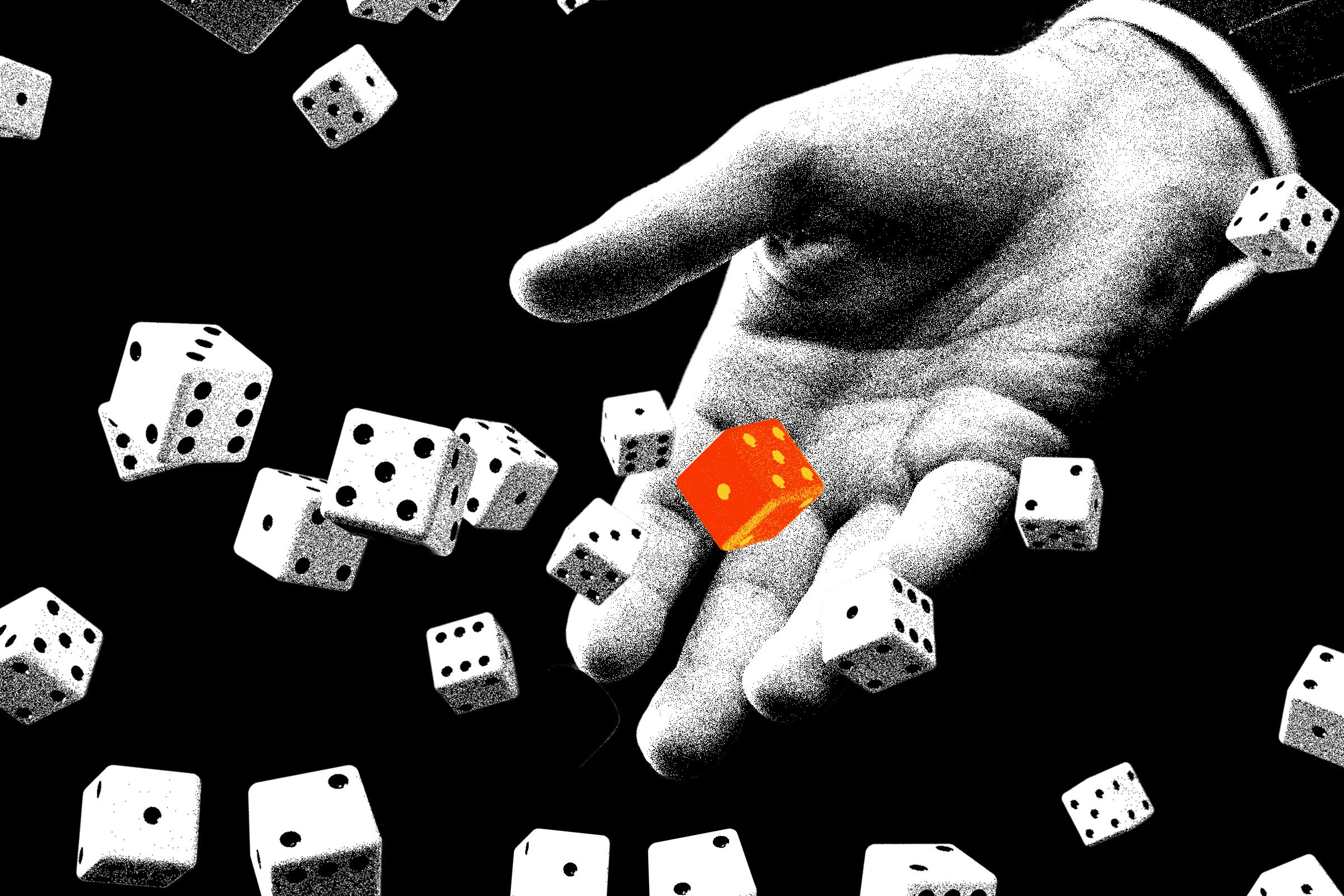
Entropy connects the invisible world of atoms with the observable world of objects. It is fundamentally tied to probability, as certain outcomes are more likely than others. To demonstrate this, imagine rolling dice. The higher the number of possible outcomes, the higher the entropy. For example, rolling a six-sided die has fewer possible outcomes (1-6) than a twenty-sided die (1-20).
Similarly, rolling three six-sided dice results in 216 possible microstates, but the macrostate (sum of the three values) determines the likelihood of specific outcomes.
Another example involves a glass of cold water and a hot copper ball. When the hot ball is added to the cold water, thermal energy transfers until both reach thermal equilibrium. This process is driven by the tendency of systems to move towards states with higher entropy, which in this case means a more uniform distribution of energy.
The concept of entropy also applies to tiny systems with a limited number of atoms. For instance, consider two objects, A and B, with different amounts of thermal energy. If Object A has two atoms and 3 units of energy, and Object B has three atoms and 7 units of energy, the total energy in the system remains constant at 10 units.
When these objects come into contact, thermal energy can transfer between them, resulting in various possible arrangements of energy, as long as the total remains constant. The more ways energy can be distributed, the higher the entropy and the more probable the outcome.
Written by urgent.news from Wired Science's reporting — not their text. Machine-written — may contain errors; check the original before relying on it.