Watch the total solar eclipse with ESA in León
Discover the science behind one of nature's most extraordinary phenomena and experience a total solar eclipse with the European Space Agency (ESA), the City of León and the University of León.
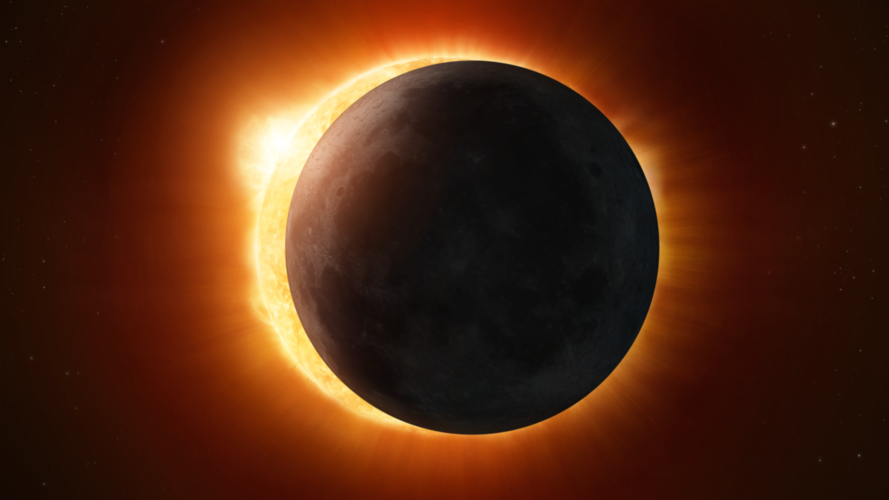
A total solar eclipse will occur on 12 August, traversing a narrow path across parts of Europe and the Atlantic and Arctic oceans. This type of eclipse occurs approximately once every 18 months when the moon aligns perfectly with the sun, blocking its entire disc and exposing the outer layers of the sun that are typically obscured by its bright surface.
However, the main event of this August eclipse will be largely confined to the ocean and remote land areas, including northern Russia, Greenland, the ocean, and subsequently, more inhabited regions as it passes through Iceland and Spain.
For those unable to witness this eclipse, there are subsequent opportunities on the horizon. The next total eclipse will occur on 2 August 2027, visible from regions of northern Africa. Although a significant portion of its path will be over the ocean, eclipse chasers consider this event particularly noteworthy, as totality – the time when the moon fully obscures the sun's disc – will last an impressive 6 minutes and 23 seconds at its peak. Such a long duration will not be repeated until 2114.
The 2027 total eclipse is deemed advantageous due to relatively low cloud cover in northern Africa during totality. Weather plays a crucial role in viewing conditions, with 2027 offering a favorable forecast. If traveling to observe a solar eclipse, 2027 emerges as an optimal choice. Following that, the next total eclipse will be visible in New Zealand and Australia in July 2028, with subsequent eclipses in November 2030 over Australia and southern Africa, and in 2031 being entirely over water.
The subsequent few years will see multiple total eclipses passing over Australia, making it the prime location for eclipse enthusiasts in the coming decade. The next total eclipse to traverse a significant part of the United States won't occur until 2045. Asia will experience total eclipses in 2034, 2035, and 2042, while South America will witness them in 2045, 2048, and 2059.
Africa will also experience several total eclipses between now and 2060. Europe will not see a total eclipse until 2081. When planning to view a solar eclipse, two primary factors should be considered: the duration of totality and the expected weather conditions.
Written by urgent.news from New Scientist's reporting — not their text. Machine-written — may contain errors; check the original before relying on it.
This story
This is one outlet's version. Read the fullest account.
- Where to watch the next total solar eclipse anywhere in the world newscientist.com