Did the asteroid that killed the dinosaurs drive tuna evolution?
A new study reveals that tunas evolved their signature size, speed, and warm-bloodedness gradually over 50 million years.
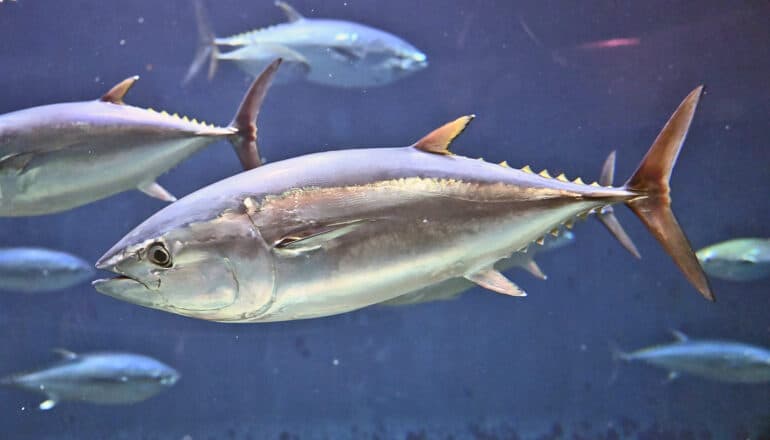
A new Yale University study challenges the theory that the asteroid strike which wiped out non-avian dinosaurs 66 million years ago directly led to the rapid evolution of large, fast, and warm-blooded tuna. Researchers combined genetic data with fossil evidence to create a detailed evolutionary tree for the Scombridae family, which includes tuna and mackerel.
Their analysis indicates that these fish evolved their signature traits over 50 million years, not in response to the mass extinction event. Lead author Chase Brownstein, a graduate student at Yale, states that the asteroid strike did not trigger the evolution of these traits in tunas and related predatory fish. Instead, the study found that endothermy and large body sizes evolved independently three times in Scombridae lineages, with at least two instances occurring up to 15 million years after the asteroid strike.
This research not only clarifies the evolutionary history of tuna but also has implications for human health, as understanding the mechanisms of endothermy in these fish could shed light on metabolic and thermoregulation-related diseases in humans.
Written by urgent.news from Futurity's reporting — not their text. Machine-written — may contain errors; check the original before relying on it.