A Trojan Horse Is Supposed to Have Humans Inside It
Christopher Nolan’s Odyssey is full of contradictions about deceit and violence.
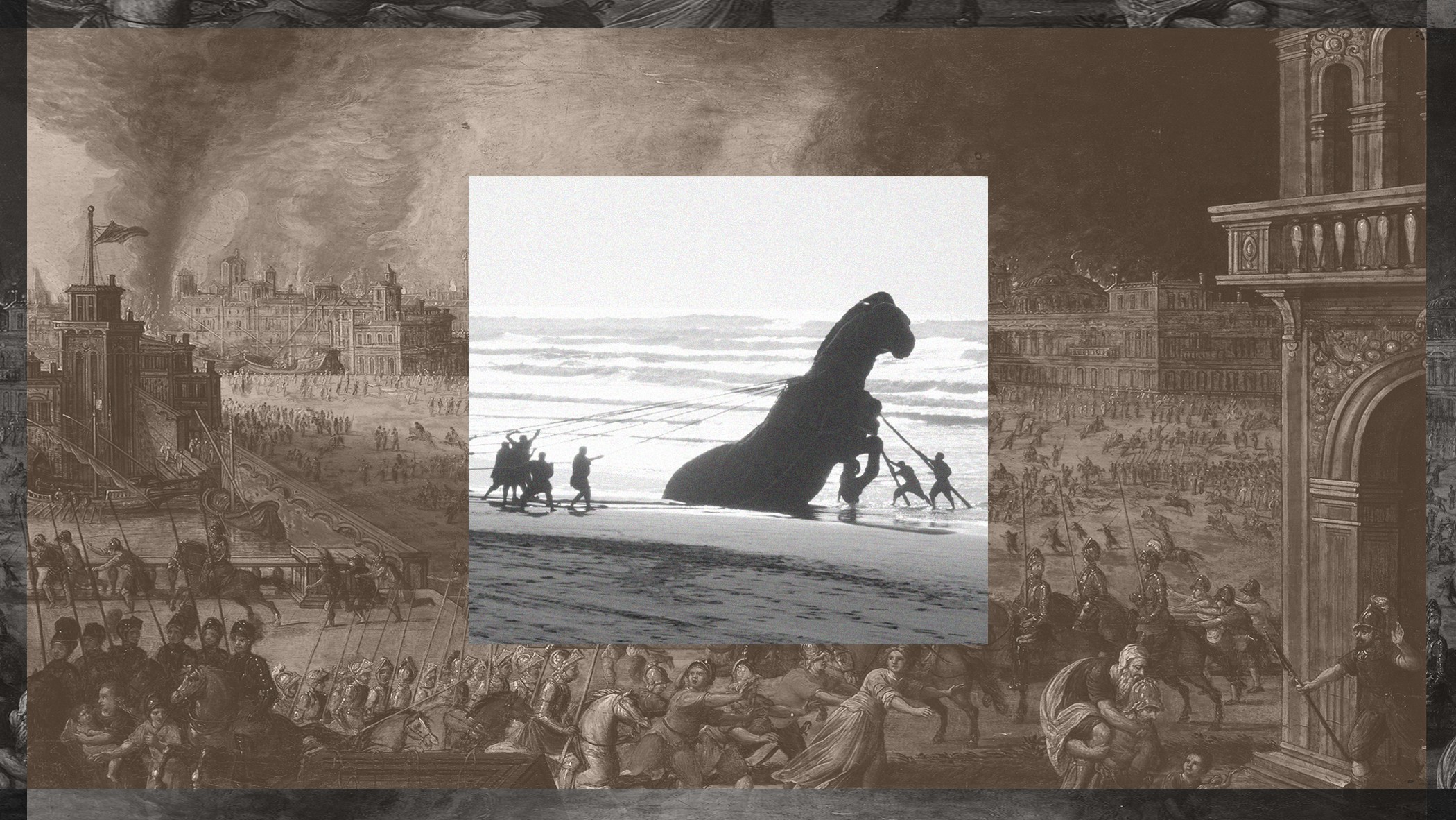
In Christopher Nolan's film Odyssey, a plastic replica of the Trojan horse, valued at $69.99, is available for purchase. The horse, emblematic of moral decay, serves as an allegory for the flexibility of symbolism; a deadly weapon can be transformed into a seemingly innocuous object. This mythical artifact has long been a tool for storytellers and artists to illustrate the changing notions of deception in warfare.
Nolan's rendition of the horse deviates significantly from previous portrayals, standing nearly 40 feet tall and requiring hundreds of individuals to maneuver it onto the beach. The film's depiction of the horse's perilous positioning, with people trapped inside as the sea encroaches, is both visually striking and profoundly unsettling.
On a narrative level, however, Nolan's horse is comparatively superficial. Compared to other action-packed films like Die Hard, The Odyssey delves more into philosophical discussions about values and the decline of civilization, but it lacks coherence and emotional depth. The movie predominantly focuses on the perspective of the guilty, traumatized warrior, rather than the victims of his actions.
Additionally, the film's excessive emphasis on technical details and its willingness to depict massacres solely for spectacle purposes, undermines its claims of valuing human life.
While the film verbally asserts the importance of human life, its visual representation suggests otherwise. The ancient myth of Troy, a prosperous city protected by the gods Apollo and Poseidon, was besieged by Greek warriors for ten years due to their inability to breach the city's defenses. The situation changed when Athena, the goddess of military strategy, inspired the cunning Odysseus to devise a plan.
Under Athena's guidance, the master craftsman Epeius constructed a massive, hollow horse, inside which Odysseus and the Greek soldiers could conceal themselves. This ingenious strategy ultimately led to the downfall of Troy.
Written by urgent.news from The Atlantic's reporting — not their text. Machine-written — it may contain errors, so check the original before relying on it.