Aspen trees provide a natural buffer against wildfires, even as fire season intensifies, study shows
Buffers made of aspen trees could help protect communities from worsening wildfires.
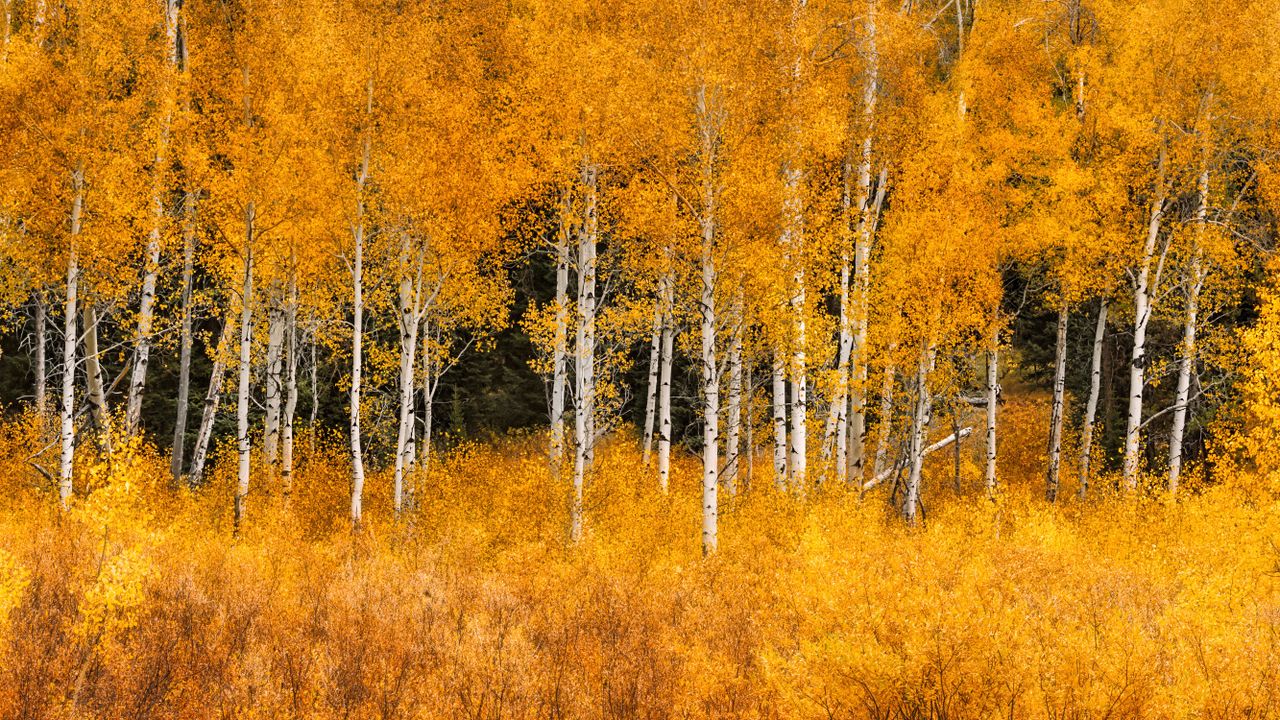
A recent study has revealed that aspen trees can act as a natural barrier against wildfires, according to research published in the journal Forest Ecology and Management. The findings suggest that areas dominated by these trees experience less intense wildfires than those made up of conifers. Although individual aspen trees are easily burned due to their thin bark, large stands of the species create a more fire-resistant environment and can function as firebreaks.
The precise reasons behind aspen stands' resilience remain unclear, but researchers believe it might be due to a combination of factors such as high moisture content in leaves and undergrowth, the absence of flammable resin, and the height of the leaves, which hinders the spread of fire to the canopy. Flavie Pelletier, who conducted the research as part of her doctoral studies at McGill University, aimed to determine whether aspen stands continue to maintain their fire-resistant properties in the face of increasing and more destructive fire seasons caused by climate change.
By combining new maps of dominant tree species in Canadian forests with satellite data on recent wildfires, Pelletier discovered that aspen trees were more than twice as prevalent at fire perimeters compared to the inner areas, while conifer species were equally present in both locations. Furthermore, the presence of more aspen trees in a given area reduced the daily amount of forest burned during a fire, indicating that they also help slow down the spread of wildfires.
Notably, aspens retained their fire resistance even in early spring, before their leaves fully sprouted. Anthony Taylor, a forest management specialist at the University of New Brunswick, noted that the study effectively analyzes and quantifies the phenomenon that Indigenous peoples and foresters have known for centuries. He emphasized that while the idea of deciduous trees burning less has been well-known for a long time, testing it provides valuable insights.
The research supports the idea of planting aspen or other deciduous trees around vulnerable communities to protect them from fires. Forest management specialists have started considering or implementing this strategy in many areas, as a single line of trees may not be sufficient to halt the flames. Instead, stands need to be deep enough to prevent the flames from spreading further, typically around 300 to 1,000 feet (100 to 300 meters).
Aspens can also play a role in fire control on a larger scale. Flavie Pelletier, who expressed concern over forestry companies' practice of using glyphosate to kill deciduous trees like aspen to make way for conifer monocultures, hopes her work will encourage them and regulators to reconsider their policies. She believes that allowing more mixed and hardwood forests, including aspen stands, would benefit companies in the long run by reducing the risk of fires and protecting their forests from destruction.
Written by urgent.news from Live Science's reporting — not their text. Machine-written — it may contain errors, so check the original before relying on it.