CNA Explains: What’s driving Japan’s urgent defence push?
Defence Minister Shinjiro Koizumi urged Japan to boost its defence capabilities with a greater "sense of urgency and crisis" on Tuesday (Aug 4), as a government white paper highlighted growing threats from China, North Korea and Russia.
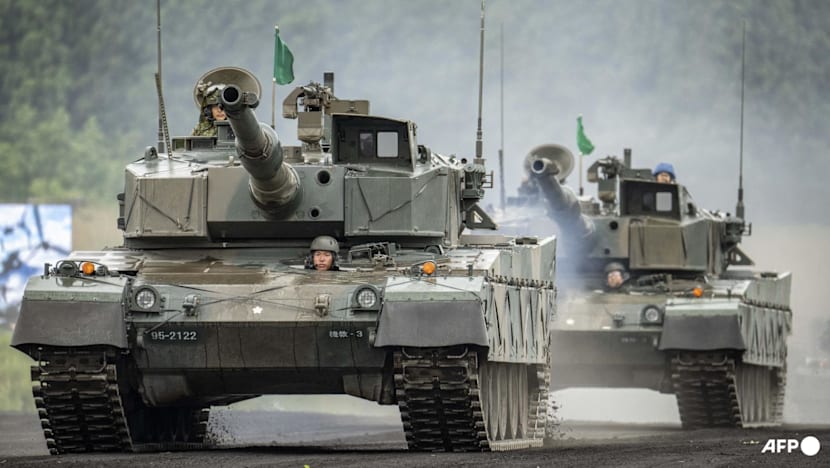
Japan's Prime Minister Fumio Kishida has urged the nation to increase defence capabilities amid escalating security concerns from China, North Korea, and Russia, according to a government white paper released on Aug 4. Officials claim the pace of defence strengthening must accelerate due to the deteriorating regional security environment.
Despite facing criticism from Beijing and Pyongyang, who accuse Japan of abandoning its post-war pacifist principles, Tokyo maintains its actions are defensive and constitutional. Critics argue this is not a sudden "remilitarization," as Japan has had self-defense capabilities since 1954 following World War II. However, a senior political scientist at RAND, Jeffrey Hornung, notes that Japan has been upgrading its defense capabilities for over a decade, with the recent phase beginning in 2022 following Russia's invasion of Ukraine.
Japan has committed to raising defense spending to 2% of GDP by 2027, already surpassing this target.
Japan's defense buildup is driven by a more threatening security environment and uncertainty over US support. Frequent military activity near Japanese territory, including 595 scrambles by Japanese jets in the year to March 31, demonstrates the escalating threat. The public's support for a more robust self-defense force has grown as regional powers and North Korea threaten Japan's security.
Global conflicts, such as those in Ukraine and the Middle East, have highlighted the risks of over-reliance on allies, increasing the need for Japan to enhance its defense capabilities.
Experts point to two main drivers: the worsening security environment and uncertainty over US support. Japan's ties with China, North Korea, and Russia have worsened in recent years, while global conflicts have underscored the risks of over-reliance on allies. The Japanese government emphasizes an "exclusively defense-oriented policy" and civilian control of the military, all while remaining within the framework of its pacifist constitution.
Analysts believe Japan's strategy serves a dual purpose, strengthening deterrence and reinforcing its alliance with Washington, while helping hedge against the rising threats in the region and the possibility of US inconstancy.
Written by urgent.news from Channel News Asia's reporting — not their text. Machine-written — it may contain errors, so check the original before relying on it.